
Wednesday, 3 March 2010
Begich's driving habits redux
I check my traffic with regularity, so I can shamelessly pander to my audience. I was checking the last couple days traffic, when I noticed this visitor to my post about Begich and the Toyota...
 :P Never had that visitor before!


Tuesday, 2 March 2010
Begich drives to D.C.
From ADN:
(Actually, I think the Toyota problem is vastly overblown, but I couldn't resist the joke.)
Alaska Sen. Mark Begich had a kind word for Toyota today during a Senate Commerce, Science and Transportation Committee hearing on the Toyota vehicle recalls, reports The Hill.
Begich told his colleagues that he drove his Toyota Highlander hybrid from Alaska to the nation's capital last summer, a distance of more than 5,000 miles, which took him 19 days to complete. ... "I'm here in one piece, and that's great. It's a good car, and I'm very happy about it."What Begich didn't mention was that he drove the entire trip without stopping. Mostly because he couldn't.
(Actually, I think the Toyota problem is vastly overblown, but I couldn't resist the joke.)
And we're back!
I'm back from things, and phew, let me whine! First, I didn't catch a moose. This is a bigger problem, because I couldn't hunt a Caribou in the winter 40 mile hunt (it was closed), and my efforts at getting a Minto Flats permit were thwarted by a car accident. I'm mentally running through lists of possible sources of fresh meat, and we're a few months out from the next opportunity. I've followed the old wisdom that you should fish your butt off in the summer in case you don't catch anything in the winter, but I'm starting to get very, very tired of salmon.
Other sage advice is to be generous with what you catch. The good person does it because that's the right thing to do. But even the selfish person should, so when they run low on meat, they can go begging to their family and friends. ;)
Part of the problem was how ADF&G divided up the antlerless hunt this year. All the closed zones made it very difficult to get to legal animals, and it forced people to hunt in zones that they knew nothing about. Maybe that wouldn't have been so bad on its own, but ice conditions were horrible. I broke through ice on a small river at one point, and only luck made sure I got the snowmachine out. Other places, the warm weather caused overflow to melt completely through, cutting off access to several trails into the flats. And then there was Salcha.
Salcha has open water everywhere. Ice out there is fragile in places, and has shifted around extensively. It took excess of an hour to find a safe path across the river. Wesst of Salcha I saw my only legal animal, but I couldn't shoot it because I was too busy making sure my snowmachine didn't go into the water to get to my gun before it saw me and went running. Finally, to cap it off, some fragile ice broke behind me (shifted?), and I had to take a very, very long way around back to my truck.
In general, things went wrong. And that's really the last large game in the interior until bears start waking up. There's always the haul road for Caribou, if I can find someone to split gas with, but I'm not sure how that is in March-April. Getting up there is a long process, and an expensive one. Other options include going out birding for ptarmigan. Luckily, I love ptarmigan (both eating them, and I like them alive, too!), so that's an option. It would definitely break up the monotony of salmon-salmon-salmon! Or I could go out for other fish, too. There's some options, but nothing that'll get me red meat.
Well, there is one...
Fred Meyers'.
*shudders* No thanks.
Other sage advice is to be generous with what you catch. The good person does it because that's the right thing to do. But even the selfish person should, so when they run low on meat, they can go begging to their family and friends. ;)
Part of the problem was how ADF&G divided up the antlerless hunt this year. All the closed zones made it very difficult to get to legal animals, and it forced people to hunt in zones that they knew nothing about. Maybe that wouldn't have been so bad on its own, but ice conditions were horrible. I broke through ice on a small river at one point, and only luck made sure I got the snowmachine out. Other places, the warm weather caused overflow to melt completely through, cutting off access to several trails into the flats. And then there was Salcha.
Salcha has open water everywhere. Ice out there is fragile in places, and has shifted around extensively. It took excess of an hour to find a safe path across the river. Wesst of Salcha I saw my only legal animal, but I couldn't shoot it because I was too busy making sure my snowmachine didn't go into the water to get to my gun before it saw me and went running. Finally, to cap it off, some fragile ice broke behind me (shifted?), and I had to take a very, very long way around back to my truck.
In general, things went wrong. And that's really the last large game in the interior until bears start waking up. There's always the haul road for Caribou, if I can find someone to split gas with, but I'm not sure how that is in March-April. Getting up there is a long process, and an expensive one. Other options include going out birding for ptarmigan. Luckily, I love ptarmigan (both eating them, and I like them alive, too!), so that's an option. It would definitely break up the monotony of salmon-salmon-salmon! Or I could go out for other fish, too. There's some options, but nothing that'll get me red meat.
Well, there is one...
Fred Meyers'.
*shudders* No thanks.
Monday, 1 March 2010
Repost: Beavers and monogamy.
Things are busybusybusy. I'm going to phone it in today. How about a blast from the past: Beaver monogamy!
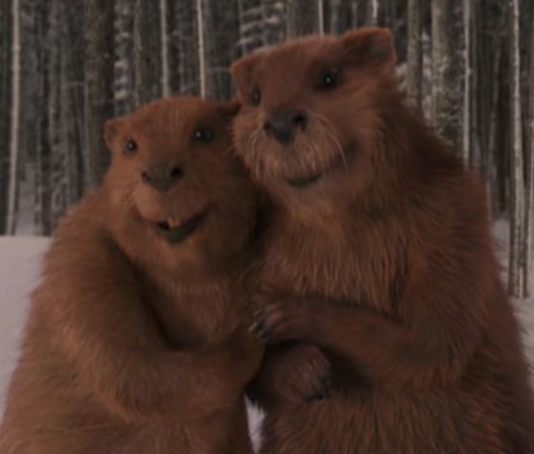 About two years ago, I decided I would destroy monogamy. That's right, I'm one of those people who are out to wreck family values that the `Focus on the Family` bunch warn us all about. Except I deal mostly with animals, so I suppose I'm who `Focus on the Family Castor Chapter` warned us all about.
See, I, in 2005-06, I first began wondering about beavers - no, not that sort. Perverts. Though, I suppose I could write off a lot of things as business expenditures if I was researching them. (I'm done with the bawdy jokes now, honestly). See, the issue with beavers is that they're stereotyped as good old, monogamous, happy family critter. And it's been my experience that when we think that's so, it simply ain't so bob.
For example, for the longest, we assumed a number of species were monogamous. Take Swift Foxes. Swift Foxes are socially monogamous, and mate for life. However, a study showed 52% of offspring were not sired by the apparent mate of the mother (Kitchen et. al 2006). Among Tree Swallows, 50% of broods studied were extra pair young (Lifjeld et. al 1992). Far from being unique, many other species of birds are apparently monogamous, but only insofar as we tend to not catch them cheating on each-other.

Mr. Beaver Began to suspect his wife was less than faithful when
he read papers in the journal Animal Behaviour describing
the rarity of monogamy in actual breeding systems.
Also, that she was cooking someone else's log for dinner was a bit of a hint.
In 2007, a book came out called Rodent Societies – An Ecological and Evolutionary Perspective, by Jerry O. Wolff(ed) and Paul W. Sherman(ed). It has a chapter written by Peter Busher on Social Organization in the Beaver. In it, he discusses facets of the beaver's social ecology, synthesizing a large amount of work for what would a grand paper. Would be, except for a single line, where he makes a parenthetical statement:
I was flabbergasted that people had poured so much work into a subject, when it was built on such a shaky premise. Sure enough, when I dug through the literature, I found no one had actually done the genetics (and published them) to show that beavers don't cheat on each other behind their flat little tails (I'm not fond of beaver tail, but I recently found it shouldn't be acridic tasting). This astounded me, and I resolve to study it right away.
Hah. Yeah Right.
Well, I never got resources together to look into the issue, but a group from EIU were wrapping up asking the same questions right around the time I decided `honestly! Really! Any day now!` Crawford et. al (2008) decided to sample colonies from south central and south east Illinois between from 2005-2007 using Conibear traps. The sexed them, weighed them, and then aged them. The took just a tiny bit of skin from each one. For a segment of the beavers, they sampled using live-trapping snares. In the end, they got samples from about 127 beavers, which is far more than I'd have been able to wing (I was looking at ~1/2 that, which would make for a less convincing paper.)
After this, they went home and extracted DNA from the skin samples, and then did parent-typing. This is done by looking at small junk regions we call `microsatellites` that are littered liberally throughout the genome. These microsats are of variable size, and so you can use a technique called PCR to make lots of copies of them, and then analyse them in a jell-o like substance and see which copies of the microsats the individual has. As you get one from mom and one from dad, you can then compare what mom and punative-dad had to see if they match. By doing lots of these microsats (Crawford et al did 7 different ones), you can assign a probability that a random individual could be the pup's mother or father. And if the pup has a form of the microsat that the punative father doesn't have at all, it's indicative of that male not being the actual father.
Actual parent typing is a tad more complex than that, but that's actually a good portion of the broad strokes. It's really, actually, quite simple in totality.
And then comes the figure the everyone's looking for. 56% of litters had more than one father. Zadgooks! This is not what they showed us in the Chronicles of Narnia at all! If that movie was to be biologically accurate, Mrs. Beaver would be spending a whole lot of time down at the gym, or showing the plumber where exactly that pipe's broken in the basement for the 3rd time that week.
And that's how it goes for Monogamy, by-and-large. There really aren't that many species that are strictly so, no matter what romantic notions we saddle them with. And why should they? Humans are scarcely monogamous - Jerry Springer's continued existence is testament to this fact, if nothing else! In most situations, it's in a critter's biological interest to mate with as many other males/females as they can get away with. It's sometimes not in their social interest, however, as Mr. Beaver might try to scratch Joe Beaver's eyes out for playing around with his wife. Humans, in the same vein, have firearms.
Joe Beaver suffers a mysterious log-related accident
after visiting Mrs. Beaver one fine afternoon. Mr. Beaver denied
wrongdoing, but in great detail, and before he'd been accused.
Crawford, J.C., Liu, Z., Nelson, T.A., Nielsen., C.K. and Bloomquist, C.K. (2008). Microsatellite analysis of mating and kinship in beavers (Castor canadensis). Journal of Mammalogy, 89(3), pp. 575-581.
Kitchen, A.M., Gese, E.M., Waits, L.P., Karki, S.M., and Schauster, E.R. (2006). Multiple breeding strategies in the swift fox, Vulpes velox. Animal Behaviour, 71(5), pp. 1029-1038.
Lifjeld, J.T., Dunn, P.O., Robertson, R.J., and Boag, P.T. (1992). Extra-pair paternity in monogamous tree swallows. Animal Behaviour, 45(2), pp. 213-229.
About two years ago, I decided I would destroy monogamy. That's right, I'm one of those people who are out to wreck family values that the `Focus on the Family` bunch warn us all about. Except I deal mostly with animals, so I suppose I'm who `Focus on the Family Castor Chapter` warned us all about.See, I, in 2005-06, I first began wondering about beavers - no, not that sort. Perverts. Though, I suppose I could write off a lot of things as business expenditures if I was researching them. (I'm done with the bawdy jokes now, honestly). See, the issue with beavers is that they're stereotyped as good old, monogamous, happy family critter. And it's been my experience that when we think that's so, it simply ain't so bob.
For example, for the longest, we assumed a number of species were monogamous. Take Swift Foxes. Swift Foxes are socially monogamous, and mate for life. However, a study showed 52% of offspring were not sired by the apparent mate of the mother (Kitchen et. al 2006). Among Tree Swallows, 50% of broods studied were extra pair young (Lifjeld et. al 1992). Far from being unique, many other species of birds are apparently monogamous, but only insofar as we tend to not catch them cheating on each-other.
Mr. Beaver Began to suspect his wife was less than faithful when
he read papers in the journal Animal Behaviour describing
the rarity of monogamy in actual breeding systems.
Also, that she was cooking someone else's log for dinner was a bit of a hint.
"[...] (although in most cases, this [genetic monogamy] has yet to be confirmed by DNA analysis) [...]" (p.281).Put another way, it says that the remainder of his chapter is based off of a massive, un-validated assumption.
I was flabbergasted that people had poured so much work into a subject, when it was built on such a shaky premise. Sure enough, when I dug through the literature, I found no one had actually done the genetics (and published them) to show that beavers don't cheat on each other behind their flat little tails (I'm not fond of beaver tail, but I recently found it shouldn't be acridic tasting). This astounded me, and I resolve to study it right away.
Hah. Yeah Right.
Well, I never got resources together to look into the issue, but a group from EIU were wrapping up asking the same questions right around the time I decided `honestly! Really! Any day now!` Crawford et. al (2008) decided to sample colonies from south central and south east Illinois between from 2005-2007 using Conibear traps. The sexed them, weighed them, and then aged them. The took just a tiny bit of skin from each one. For a segment of the beavers, they sampled using live-trapping snares. In the end, they got samples from about 127 beavers, which is far more than I'd have been able to wing (I was looking at ~1/2 that, which would make for a less convincing paper.)
After this, they went home and extracted DNA from the skin samples, and then did parent-typing. This is done by looking at small junk regions we call `microsatellites` that are littered liberally throughout the genome. These microsats are of variable size, and so you can use a technique called PCR to make lots of copies of them, and then analyse them in a jell-o like substance and see which copies of the microsats the individual has. As you get one from mom and one from dad, you can then compare what mom and punative-dad had to see if they match. By doing lots of these microsats (Crawford et al did 7 different ones), you can assign a probability that a random individual could be the pup's mother or father. And if the pup has a form of the microsat that the punative father doesn't have at all, it's indicative of that male not being the actual father.
Actual parent typing is a tad more complex than that, but that's actually a good portion of the broad strokes. It's really, actually, quite simple in totality.
And then comes the figure the everyone's looking for. 56% of litters had more than one father. Zadgooks! This is not what they showed us in the Chronicles of Narnia at all! If that movie was to be biologically accurate, Mrs. Beaver would be spending a whole lot of time down at the gym, or showing the plumber where exactly that pipe's broken in the basement for the 3rd time that week.
And that's how it goes for Monogamy, by-and-large. There really aren't that many species that are strictly so, no matter what romantic notions we saddle them with. And why should they? Humans are scarcely monogamous - Jerry Springer's continued existence is testament to this fact, if nothing else! In most situations, it's in a critter's biological interest to mate with as many other males/females as they can get away with. It's sometimes not in their social interest, however, as Mr. Beaver might try to scratch Joe Beaver's eyes out for playing around with his wife. Humans, in the same vein, have firearms.

Joe Beaver suffers a mysterious log-related accident
after visiting Mrs. Beaver one fine afternoon. Mr. Beaver denied
wrongdoing, but in great detail, and before he'd been accused.
Crawford, J.C., Liu, Z., Nelson, T.A., Nielsen., C.K. and Bloomquist, C.K. (2008). Microsatellite analysis of mating and kinship in beavers (Castor canadensis). Journal of Mammalogy, 89(3), pp. 575-581.
Kitchen, A.M., Gese, E.M., Waits, L.P., Karki, S.M., and Schauster, E.R. (2006). Multiple breeding strategies in the swift fox, Vulpes velox. Animal Behaviour, 71(5), pp. 1029-1038.
Lifjeld, J.T., Dunn, P.O., Robertson, R.J., and Boag, P.T. (1992). Extra-pair paternity in monogamous tree swallows. Animal Behaviour, 45(2), pp. 213-229.
Friday, 26 February 2010
AWOL in the interior.

Thursday, 25 February 2010
A conversation that definitely took place.
From the Tundra Drums:
Scene: PAKISTAN BORDER CAVE.
Mohammed Omar enters into the cave, and kneels on the symbol of Al Quida.
OMAR: What is thy bidding, my master.
The ghostly image of Osama Bin Laden appears above the cave floor.
BIN LADEN: There is no great disturbance among the Americans.
OMAR: I have seen it.
BIN LADEN: We must strike fear into our enemy.
OMAR: Yes my master.
BIN LADEN: We must destroy.
OMAR: But where? New York... Washington... we have done these.
BIN LADEN: Indeed. We must strike deep into their heart. We must strike them where they will never recover. York Model Railway Station.
OMAR: Isn't that part of another skit by a much funnier fat Irish man?
BIN LADEN: Was it? Damn that bald Irishman. Make a note: We crash an air plane into Dara O'Briain's house next June.
OMAR: Yes, my master.
BIN LADEN: No, what will truly break the will of the American pigs... is if we attack the Bethel Alaska's Airport.
OMAR: Bethel? Is that... wise?
BIN LADEN: Indeed. Our strike will come suddenly, and without warning. Yes, more people are in the average Reno Casino on a given day, than have been in Bethel ever, but this is exactly why it will work.
OMAR: But... my master... they have a new armory building, which was built in part through a homeland security justification.
BIN LADEN: Damn those American rats! They'll rue the day they thwarted me with their strategic protection of Bethel.
OMAR: continues to kneel in uncomfortable silence.
BIN LADEN: Just as well. We probably should not split our resources from our plan to attack the true hub of America, Great Falls Montana.
The new five-acre spot at the airport, near the hangar where the Guard parks Blackhawk helicopters, is a perfect location because of the military's transformation from a Cold War force to one prepared for new threats in the wake of 9/11, Katkus said.
For example, the military today strives to better protect airports and the armory's location will help provide additional security, he said.
Scene: PAKISTAN BORDER CAVE.
Mohammed Omar enters into the cave, and kneels on the symbol of Al Quida.
OMAR: What is thy bidding, my master.
The ghostly image of Osama Bin Laden appears above the cave floor.
BIN LADEN: There is no great disturbance among the Americans.
OMAR: I have seen it.
BIN LADEN: We must strike fear into our enemy.
OMAR: Yes my master.
BIN LADEN: We must destroy.
OMAR: But where? New York... Washington... we have done these.
BIN LADEN: Indeed. We must strike deep into their heart. We must strike them where they will never recover. York Model Railway Station.
OMAR: Isn't that part of another skit by a much funnier fat Irish man?
BIN LADEN: Was it? Damn that bald Irishman. Make a note: We crash an air plane into Dara O'Briain's house next June.
OMAR: Yes, my master.
BIN LADEN: No, what will truly break the will of the American pigs... is if we attack the Bethel Alaska's Airport.
OMAR: Bethel? Is that... wise?
BIN LADEN: Indeed. Our strike will come suddenly, and without warning. Yes, more people are in the average Reno Casino on a given day, than have been in Bethel ever, but this is exactly why it will work.
OMAR: But... my master... they have a new armory building, which was built in part through a homeland security justification.
BIN LADEN: Damn those American rats! They'll rue the day they thwarted me with their strategic protection of Bethel.
OMAR: continues to kneel in uncomfortable silence.
BIN LADEN: Just as well. We probably should not split our resources from our plan to attack the true hub of America, Great Falls Montana.
White-Tailed deer and asymmetry
In general, we expect fluctuating asymmetry to be a sexually selected trait. How's that for an opening line? But it's generally true: Females prefer males that are more symmetric. We find that in humans, mice, rats, and about a dozen other things, so the finding is fairly robust. In fact, you can experimentally alter faces' symmetry using computers, increasing it or decreasing it artificially, and ask people to rank them. People are pretty consistent in their rankings, across cultures.
Why? Why do animals prefer more symmetric animals? Well, there's a slew of hypotheses. Most of them revolve around the fact that the random deviations from symmetry (that's where the 'fluctuating asymmetry' term comes from) tend to be linked with past stress. It could be it was a sick child. Or a poorly fed child. Or in development, they got into problems with predators, or other sources of injury. Or it could have been environmental toxic exposure. Whatever the cause, the response tends to be pretty straight forward: do not want.
If a mouse was very sick as a pup, that means that a choosy mouse doesn't want him. After all, it might have STDs. Or it could have bad genes, that predispose it to sickness. Or it lacked behaviour that kept it away from infection. Either way, a choosy mouse doesn't want any diseases itself, and it definitely doesn't want bad genes for its offspring. No thank you! If it wasn't fed much as a pup, well, its mother gave its food finding skills/knowledge/genes, and you don't want those either. That, is, in a nutshell, fluctuating asymmetry. Or, as the cool kids call it, "Flucing A." Serious. Scientists say that with a straight face.
Weidros.
 Most fluctuating asymmetry comes from early/juvinile development, because that's when most of the development occurs. But traits like antlers pose an interesting extension, because they're produced fresh each year. In theory, each new set of antlers is a demonstration of how the bull's life has gone up to that point, not just up until it reached adulthood. That's multiple points to demonstrate fluctuating asymmetry. If a male had a bad year, that information will be integrated into its antlers the next season. And antlers are some of the fastest growing tissues, so they easily react to stress to induce fluctuating asymmetry. They're also sexually selected traits, in that antlers mostly exist to woo the ladies, or intimidate other males.
In general, we expect the following pattern: Older males, less fluctuating asymmetry. That's because if you've lived a while a) you're good at what you're doing (and the worse ones have died off a bit) and b) you're more socially dominant. Also, we generally expect larger antlers to have lower fluctuating asymmetry, because only good males can make big antlers. Previous studies have found positive relationship between symmetry and low of parasite load, while others have found vague support for fluctuating asymmetry and antler size.
But here's the thing. Those were with 2-d measurements. Highly asymmetric antlers could numerically be recorded as symmetric because the data can't distinguish symmetry.
Well, Stephen Ditchkoff and Rachel L DeFreese decided to correct that. In their paper, "Assessing fluctuating asymmetry of white-tailed deer antlers in a three-dimensional context," (DOI: 10.1644/09-MAMM-A-134R.1.), they used 3-dimentional modelling to find out if a) Antler Size is negatively correlated with fluctuating asymmetry and b) age is negatively correlated with fluctuating asymmetry.
What was their sample size? What was the nutritional status of the deer? What was the sample site? All these I can't answer in any detail, because frankly, the descriptions in the paper were wanting. They mention two counties in Alabama in 2002-2003 hunting season... well heck, that means nothing to me. In such an environmentally induced trait, population location, and position with respect to carrying capacity (K) matters. I'm going to assume that these were good years, in apex populations. But how many samples? I don't see it spelt out clearly. I think it's 121, because that's the largest n they have on any of their measurements. Still, I'm unhappy with that. I normally enjoy Ditchkoff papers, so this was bum.
But, when all is said and done, they tested their two hypotheses, and reject both of them. Age is at best weakly correlated (r≤0.33) without be statistically significant (P≥0.083). Further, there wasn't any consistent link between age and decreased fluctuating asymmetry. The stats on this are messy, and the tables numerous. But the take home message I think is sound.
 So, WTF? I tell you all about fluctuating asymmetry, and then I tell you it's bunk? Well, I wouldn't say that. I don't think age is a big role in fluctuating asymmetry, because of Bowyer, one of our ex-faculty, who did some work in moose. I've attached some graphs that show that males increase over age, before petering out at the end. Really old bulls then enter decline, when their antlers go to heck. I wanted a picture of clubbed antlers, but I don't have one handy - shame. So that would erode the relationship between age and fluctuating asymmetry. Antler size is a bit more troublesome... and I think the authors were on to something when they offered the hypothesis that maybe things weren't severe enough to produce patters.
Given antlers tend to hit a max with age, most bull moose (or buck deer, in this case) will have roughly the same size, within a normal distribution. When you really see a lopsided distribution (gamma) is when times are tough, and there's one shining winner, and a whole lot of losers who aren't looking so pretty any more. This is why ecological information is important in fluctuating asymmetry papers. I need to know how much the animals are getting pushed, because it's when the things get bad you know who's worth his salt.
Why? Why do animals prefer more symmetric animals? Well, there's a slew of hypotheses. Most of them revolve around the fact that the random deviations from symmetry (that's where the 'fluctuating asymmetry' term comes from) tend to be linked with past stress. It could be it was a sick child. Or a poorly fed child. Or in development, they got into problems with predators, or other sources of injury. Or it could have been environmental toxic exposure. Whatever the cause, the response tends to be pretty straight forward: do not want.
If a mouse was very sick as a pup, that means that a choosy mouse doesn't want him. After all, it might have STDs. Or it could have bad genes, that predispose it to sickness. Or it lacked behaviour that kept it away from infection. Either way, a choosy mouse doesn't want any diseases itself, and it definitely doesn't want bad genes for its offspring. No thank you! If it wasn't fed much as a pup, well, its mother gave its food finding skills/knowledge/genes, and you don't want those either. That, is, in a nutshell, fluctuating asymmetry. Or, as the cool kids call it, "Flucing A." Serious. Scientists say that with a straight face.
Weidros.
 Most fluctuating asymmetry comes from early/juvinile development, because that's when most of the development occurs. But traits like antlers pose an interesting extension, because they're produced fresh each year. In theory, each new set of antlers is a demonstration of how the bull's life has gone up to that point, not just up until it reached adulthood. That's multiple points to demonstrate fluctuating asymmetry. If a male had a bad year, that information will be integrated into its antlers the next season. And antlers are some of the fastest growing tissues, so they easily react to stress to induce fluctuating asymmetry. They're also sexually selected traits, in that antlers mostly exist to woo the ladies, or intimidate other males.
In general, we expect the following pattern: Older males, less fluctuating asymmetry. That's because if you've lived a while a) you're good at what you're doing (and the worse ones have died off a bit) and b) you're more socially dominant. Also, we generally expect larger antlers to have lower fluctuating asymmetry, because only good males can make big antlers. Previous studies have found positive relationship between symmetry and low of parasite load, while others have found vague support for fluctuating asymmetry and antler size.
But here's the thing. Those were with 2-d measurements. Highly asymmetric antlers could numerically be recorded as symmetric because the data can't distinguish symmetry.
Well, Stephen Ditchkoff and Rachel L DeFreese decided to correct that. In their paper, "Assessing fluctuating asymmetry of white-tailed deer antlers in a three-dimensional context," (DOI: 10.1644/09-MAMM-A-134R.1.), they used 3-dimentional modelling to find out if a) Antler Size is negatively correlated with fluctuating asymmetry and b) age is negatively correlated with fluctuating asymmetry.
What was their sample size? What was the nutritional status of the deer? What was the sample site? All these I can't answer in any detail, because frankly, the descriptions in the paper were wanting. They mention two counties in Alabama in 2002-2003 hunting season... well heck, that means nothing to me. In such an environmentally induced trait, population location, and position with respect to carrying capacity (K) matters. I'm going to assume that these were good years, in apex populations. But how many samples? I don't see it spelt out clearly. I think it's 121, because that's the largest n they have on any of their measurements. Still, I'm unhappy with that. I normally enjoy Ditchkoff papers, so this was bum.
But, when all is said and done, they tested their two hypotheses, and reject both of them. Age is at best weakly correlated (r≤0.33) without be statistically significant (P≥0.083). Further, there wasn't any consistent link between age and decreased fluctuating asymmetry. The stats on this are messy, and the tables numerous. But the take home message I think is sound.
 So, WTF? I tell you all about fluctuating asymmetry, and then I tell you it's bunk? Well, I wouldn't say that. I don't think age is a big role in fluctuating asymmetry, because of Bowyer, one of our ex-faculty, who did some work in moose. I've attached some graphs that show that males increase over age, before petering out at the end. Really old bulls then enter decline, when their antlers go to heck. I wanted a picture of clubbed antlers, but I don't have one handy - shame. So that would erode the relationship between age and fluctuating asymmetry. Antler size is a bit more troublesome... and I think the authors were on to something when they offered the hypothesis that maybe things weren't severe enough to produce patters.
 Given antlers tend to hit a max with age, most bull moose (or buck deer, in this case) will have roughly the same size, within a normal distribution. When you really see a lopsided distribution (gamma) is when times are tough, and there's one shining winner, and a whole lot of losers who aren't looking so pretty any more. This is why ecological information is important in fluctuating asymmetry papers. I need to know how much the animals are getting pushed, because it's when the things get bad you know who's worth his salt.
Wednesday, 24 February 2010
Lawyers for Lamprey?
Switzerland as a country has officially jumped the shark. Well, they would have, if they hadn't have decided that Sharks deserve better. On March 7th, they're going to vote on whether animals deserve lawyers.
They're going to vote on whether animals deserve lawyers.
I need a lawyer to represent me for all the pain and mental anguish this story has caused me trying to wrap my head around it.
On the other hand, dead fish have feelings too, I guess.

They're going to vote on whether animals deserve lawyers.
The debate took on a new dimension two weeks ago when prosecutors in the canton of Zurich accused an angler of having tortured a large pike, because the battle between man and beast took about 10 minutes.Wh... what? Huh? Who? Seriously? Seriously?
Goetschel, in his capacity as the canton's animal lawyer, was in court to represent the dead fish. He regrets that the case, which isn't typical of his work, received so much attention.
I need a lawyer to represent me for all the pain and mental anguish this story has caused me trying to wrap my head around it.
On the other hand, dead fish have feelings too, I guess.
Switzerland:


Tuesday, 23 February 2010
Alaska: Then and Now

While intellectually I know that Alaska's changed a lot since 1949, it's sometimes hard to realize just how much. I've been looking at old topographical maps, which show Alaska as it was 50-70 years ago, looking at village locations to see what went away, what the surveyors missed, and what popped up since then. In the YK, the BIA had more effect on where villages ended up than almost anything else - I suspect that might be true on the North Slope, too, but I don't know for sure.
When Goldstream didn't have a road, or anything, I couldn't help but notice this little CDP called "Happy." It's just to the east of Ester Dome. Right now, it's where Sheep Creek Rd. crosses the Goldstream Creek. What happened to Happy? Did they become sad and leave? Right now, there's a small collection of homes there, on the less cheerfully named "Aurora Borealis Drive." Bring back Happy, I say!
There's something else I've noticed, but it isn't on this map I've shown you. When I drove the Parks Highway back in July, I realized that there was an air strip right after you leave the Denali area, when you start getting into the very edge of the Susitna valley, in the Chulitna headwaters. It's called "Summit." It's a very lovely area, and there's a large lake (Edes Lake), and a couple random cabins over there. Oh, and wind turbine. I started wondering what was the story behind Summit - I tried googling it, but I can't find anything.
When I looked at the area in a 1951 topo, even ignoring the highway, Summit looks very different. It had roads going up and down a bit - rare in that area, for that time. And there are a lot of black dots that indicate cabins... more than Cantwell. Even back then it had an Air Strip. What was Summit? I don't see any signs of mining either in person, or on the map. It's a very pretty area, but it's a very inhospitable area. I really want to know what the story behind Summit was.
Edited to add: Looking at these old topos, and just thinking about challenges 110 years ago in general, I can't help but feel like all of us alive now are frauds. We're not our grandfathers and grandmothers. We have it so easy it's laughable.
On the other hand, I'll trade being a fraud for having a mean life expectancy of twice of 1900s. That's 2x the time to feel like a fraud.
Monday, 22 February 2010
Rom's F/C shown not to work.
I suppose I'm one of those awful sceptics that people frown at. The serious sort who are no fun to be around. The ones that tell you there's no ghost, just some creaky plumbing and an old log house. Or that's how people often frame it. Truth be told, I wish there was magical cures, ESP, and all that. It sure would make life better, wouldn't it?
I have the same mixed feelings about the story of the Belgian who used Facilitated Communication to allegedly talk, after being in a coma for 23 years. Briefly, a doctor argued that he's not in a coma, but fully awake and aware based on fMRI findings (And we know what my opinion of fMRI is...). He then was paired with a Facilitated Communication therapist who moved his finger from key to key, allegedly allowing him to talk. However, when they tested it, the doctor found the patient couldn't tell him anything the FC therapist didn't know.
The Guardian would have you believe that people like me are crowing over this. I'm not. The family has been through a hell of a lot, and now they've been kicked yet again. It's entirely possible that the FC therapist thinks what she was doing was legitimate. They often do - it exploits subconscious effects, not unlike the Ouija board. She, too, has probably had the rug yanked out from under her.
The only moral of the story I can find here is that a slow, methodical approach, while unsatisfying to families, is the best way to go. I can't think of any silver lining for the family, who have obviously been through enough.
I have the same mixed feelings about the story of the Belgian who used Facilitated Communication to allegedly talk, after being in a coma for 23 years. Briefly, a doctor argued that he's not in a coma, but fully awake and aware based on fMRI findings (And we know what my opinion of fMRI is...). He then was paired with a Facilitated Communication therapist who moved his finger from key to key, allegedly allowing him to talk. However, when they tested it, the doctor found the patient couldn't tell him anything the FC therapist didn't know.
The Guardian would have you believe that people like me are crowing over this. I'm not. The family has been through a hell of a lot, and now they've been kicked yet again. It's entirely possible that the FC therapist thinks what she was doing was legitimate. They often do - it exploits subconscious effects, not unlike the Ouija board. She, too, has probably had the rug yanked out from under her.
The only moral of the story I can find here is that a slow, methodical approach, while unsatisfying to families, is the best way to go. I can't think of any silver lining for the family, who have obviously been through enough.
Friday, 19 February 2010
Ice Sculpture outside Signers Hall

Thursday, 18 February 2010
Three new genomes
There's been some exciting stuff in the last two weeks in terms of human genetics. This week, Nature has published two new complete human genomes, from southern Africa. Right now, sampling has been focused on Europe and Asia, which to be fair represents about half the human race right there. However, in terms of where human diversity is located, Europe, Asia, Australia and the North and South America are relatively homogeneous compared to the centre of human radiation, Africa. You can really see this when you take a glance at the number of unique polymophisms shared by various genomes sampled in these diagrams.
 The areas that overlap show similarity, the areas that don't overlap show unique diversity. Immediately what stands out to me is that the African samples have almost double the unique diversity that the other sampled genomes do. This is expected, but it really drives home how much we've been underestimating divergence. This is because we haven't been looking at that diversity before now - all our DNA diversity sites have been based off of European and Asian genomes. This is great for most of the work that has focused on Europe, Asia, and America, since it targets the applicable diversity. But because we haven't been looking at the African-European and the African-Asian big differences, it's underestimated divergence within Africa, and between Africa and other human populations.
Neat stuff. Very very neat. If I were to pick two places to study human genetics, I'd do it in Africa (super high diversity!) or the South Pacific (Lower diversity lets you study gene by environment effects).
The other thing that came out recently was also from Nature, which was the Genome of ancient remains (hair) from Greenland. This is one of the longest look backs we've had, and really tells us a bit about the last migration wave to North America. People in the Eskimo-Aleut language family are generally thought to be late comers to North America, which shouldn't be a massive shock, since most the areas Eskimo live weren't exactly habitable thirteen thousand years ago (They were covered by massive, mile thick ice sheets).
 I've thrown up a figure from the Nature Paper. The paleo-Greenlander is labeled Saqqaq in this diagram. Each vertical bar represents one individual. The colours in that bar represent them being assigned to a population, so all the beige bars are 100%% beige population (Koryak), and the beige and yellow are half Beige population, and half yellow (Nganasan). You can see Saqqaq is closest to the modern Chukchi, though there's considerable noise in all the assignments (real data is messy!). More interestingly, if you look at modern east and west Greenlanders, they don't have some of the diversity he has, and they have a strong blue measure of admixture. That's diversity that it shares with Europe and pre-contact Americans.
This is cool because it really tells a story about how this group represented by Saqqaq made a massive journey in an incredibly short period of time. It also helps scientists pin down when that last migration wave came in, peopling the arctic, with better accuracy. It's also cool because we can tell a man 5.5kya was balding through looking at nothing more than his DNA. And it shows how incredibly fast humans adapted culturally to the arctic. The authors of the paper claim some small number of SNPs show that he had metabolic adaptations to cold climates, but I'm suspicious of the genetic effects they're claiming. Even granting them, Saqqaq's people still had to culturally adapt to a huge amount of environment that they'd never encountered before. It's like the first human to step foot out of Africa, only to discover how cold it can get at night, but a thousand fold more severe.
Culture is a powerful and under appreciated tool. I think this ancient DNA study drives that point home to me.

Neat stuff. Very very neat. If I were to pick two places to study human genetics, I'd do it in Africa (super high diversity!) or the South Pacific (Lower diversity lets you study gene by environment effects).
The other thing that came out recently was also from Nature, which was the Genome of ancient remains (hair) from Greenland. This is one of the longest look backs we've had, and really tells us a bit about the last migration wave to North America. People in the Eskimo-Aleut language family are generally thought to be late comers to North America, which shouldn't be a massive shock, since most the areas Eskimo live weren't exactly habitable thirteen thousand years ago (They were covered by massive, mile thick ice sheets).

This is cool because it really tells a story about how this group represented by Saqqaq made a massive journey in an incredibly short period of time. It also helps scientists pin down when that last migration wave came in, peopling the arctic, with better accuracy. It's also cool because we can tell a man 5.5kya was balding through looking at nothing more than his DNA. And it shows how incredibly fast humans adapted culturally to the arctic. The authors of the paper claim some small number of SNPs show that he had metabolic adaptations to cold climates, but I'm suspicious of the genetic effects they're claiming. Even granting them, Saqqaq's people still had to culturally adapt to a huge amount of environment that they'd never encountered before. It's like the first human to step foot out of Africa, only to discover how cold it can get at night, but a thousand fold more severe.
Culture is a powerful and under appreciated tool. I think this ancient DNA study drives that point home to me.
Wednesday, 17 February 2010
How to abuse Coffee
This is very, very cool.
 A neuroscientist has written a guide for getting the most out of your Caffeine buzz. For people like me, who subsist on a pot a day, this is pure gold. His big points?

- Moderate your intake to small, frequent doses.
- Aim for tasks that caffeine improves performance, avoid tasks that it decreases performance.
- Consume Caffeine with the correct adjuvents.
- Know when to go without.
- Use the right sources of caffeine.

Tuesday, 16 February 2010
Kuinerraq gets new houses?

So I'm really happy that they've apparently worked well in Anaktuvuk Pass, and Quinhagak is considering them too. They want to make theirs octaganal, which is an interesting idea. I have a hard time imagining living in an octagonal house, though! The problem would be arranging things, so you don't waste space.
One other thing I wonder about is how they insulate the house from the permafrost, to keep it from melting into the ground. Would permafrost melting be more dangerous to a buried house? I wonder.
Subscribe to:
Posts (Atom)
