The most excellent Dr. Palmer has written an interesting post on how she views many biology graduate students shoot themselves in the foot through focusing on the wrong skills in their tenure as students. While on whole I would agree with what she's written, especially the bits about non-transferable skills, I think the focus on `soft skills,` things such as lit reviews and public speaking, is slightly misguided.
While soft skills might help you get a job in the future (potentially one goal of a Ph.D. student), I'm not convinced they're the major determinant of your ability to get hired. You see, I've just suffered through a hiring committee - I wasn't actually on it, but everyone even tangentially affiliated with me was, which meant I might as well have been on it given how often I was caught up in conversations about it. While quite a few of the candidates were highly polished presenters, with style and panache, that didn't necessarily correlate with getting into the final list of candidates.
What's more important, I would argue, is not the technical skills - those will vary over time. Learning R now is like learning SAS 15 years ago. Sure, it gives you a temporary window of relevance, but unless you're constantly chasing your tail picking up the latest technical skills, you'll quickly become irrelevant (Yes, I am arguing SAS is passé). But nor is it the soft skills - Billy Mayes would not be a top candidate in any academic job search, should he still be alive, no matter how much useless junk he can convince people to buy. The important things to get out of a Ph.D. education is an integrated worldview and conceptual framework upon which to hang your hat. It's raw knowledge.
Don't forget you're at an institute of higher learning. While there's just a bit more to a job search than being bright, in academia we tend to be awfully capitalistic in how we pick professors. Results matters, and to generate really good results, you either need to be a) lucky or b) good. Since you generally can't count on a lucky career path falling in your lap, it's better to focus on being good. And the most important aspect of conducting good research is not methodological prowess, or your ability to communicate your results to the public, but your ability to have the conceptual framework to conduct robust, appropriately nuanced research.
Here's a question I've found really reveals the strengths and weaknesses of any graduate, be it Ph.D. or B.S. Ask them, quite simply, "What do you think the big, unanswered questions in your field are?" If they start prattling on about P52 protein structure, it's clear they don't have the right conceptual framework, or they're hopelessly mired in the details. Likewise, if they feel there aren't any big parts of the map with "Here Be Dragons" written on it, they haven't thought critically about their field either.
Showing posts with label biology. Show all posts
Showing posts with label biology. Show all posts
Thursday, 31 March 2011

Monday, 21 February 2011
Where's the stastics?
 After reading over and digesting Nelson's (1998) "Development of migratory behaviour in northern white-tailed deer" the group had gradually come to the conclusion that the paper did not really belong in the otherwise good Canadian Journal of Zoology. The paper is very little more than a case study of the fates of 36 collared white-tail fawns. Case studies have their value, but the problem arose when they tried to translate this into hypothesis testing.
The study, in short, radio collared the affronted 36 fawns in the winter and followed their fates. They found that the majority of them returned with their mothers to their 'natal summer ranges' and a portion of those back-migrated to the same winter ground. Some deer dispersed to new summer grounds, and would back-migrate to a winter ground. Everything else in the paper is individual case summaries too tedious to recreate here.
The most glaring omission throughout this paper was that there was almost no statistics to speak of. I could only find one instance where I knew a confidence interval, and it was on a trivial value. Everything else is presented as percents, without any way of knowing if the differing value of percentages means the effects were significant. Secondly, we have no way of knowing whether the deer truly returned to their natal ranges - the author just assumes where they went after their first winter was their natal range. They collared the fawns at the wrong time of year to really wrap their head around the phenomenon. Finally, in the discussion, the author included unpublished data to bolster their own hypothesis. We were not overly impressed by this.
The big disappointment is that this topic is of general interest. Migratory behaviour in ungulates is understudied compared to birds, and many species that engage in migratory behaviour are of considerable human importance. It would be fascinating to repeat this study with fawns collared at birth (or soon after) to tease apart how white-tails establish their migratory behaviour in more mobile populations. This does not shed much, if any, light on the issue.
(X-posted)
Thursday, 27 January 2011
Sometimes, it does matter where you're from.
One of the major thrusts of the research I've involved with in the last few years is in the world of "domestic introgression." Some times, when we move animals around, there will be a pre-existing wild form of that species. For reindeer transplanted to Alaska, it's the endemic caribou. Some mink farms are in areas that already have a wild mink population. And a dog is nothing, if not a very funny looking, strangely behaving wolf. The concern is often that our tame species - the domestic species - will breed with the native wildlife, introducing genes that have more to do with living with humans than in the wild. That's what we call introgression - broadly speaking, it's when genes from a species or subspecies sneak into a new species. In many cases, natural selection can do its thing and purge these genes, but with the right conditions, even these very poorly-adapted traits do filter in to the wild population.
Red foxes have been extensively bred for farm fur, not unlike mink. The sort that have ended up in these farms are a total hodgepodge of various foxes bred together for the best fur characteristics, while still being tame. You might remember the tame, Russian foxes I talked about earlier, with their collie like appearance and their cheery disposition. Some foxes escaped in Californian fur farms in the mid-1900s, where they established a growing invasive population in the Sacramento Valley over the ensuing time. From here, they've come into contact with the native foxes - foxes that have long been there, and are well adapted to the local environment.
Enter Benjamin Sacks and colleagues, working out of the University of California, Davis. They took DNA from foxes throughout the Sacramento Valley, and looked at a variety of markers - some mitochondrial, some microsats, and some SNPs. In addition to the typical analyses (For HWE, Linkage, and so on), they assessed whether there were domestic introgression into the wild foxes using STRUCTURE (a package that assigns individuals to populations when you don't know the number or placement of the clusters) and BayesAss, which assigns individuals to populations based on prior knowledge of the populations. Finally, they used Migrate-N to assess how much the geneflow there was between the domestic foxes and the native foxes.

From the traditional stats, they had a microsat HE of 0.65 and 0.69 - something I would think is low given an average number of 6.1 and 6.6 alleles per locus. They didn't have any HWE issues. Additionally, it was clear that the wild and the introduced groups of foxes assorted with themselves spatially - that is, there was a region of native fox, and a region of introduced fox, and not the two intermixed in the same area. You can check out the figure to the right to get the general feel for the lay out - the caption has a lot of useful information in reading it.
When they looked at information about potential migrants, and admixture, they found a small number of individuals who didn't match either the 'native' or the 'introduced' groups that they resided within. When they looked at the mitochondrial DNA with the nuclear DNA, it was clear that all of them were of clear hybrid origin - not migrants, but the first generation cross between a migrant and the local group of fox. However, the authors also argue that there's a region of individuals who are primarily of hybrid origin. Finally, the analysis of Migrate-N showed a generally low level of introgression between the groups, of about 1.31 and 0.91 effective migrants per-generation.
Taken together, Benjamin Sacks and colleagues argue that there is some sort of selection preventing the groups from intermixing. Something about the inherent ecology of the wild or domestic foxes (or both) is preventing too much of the domestic genes from bleeding into the native foxes, and vice versa. They suggest that the hybrids they do find are due to a low density area, and but that the mating system of red foxes makes it difficult for introduced foxes to interbreed with the native foxes. I remain somewhat skeptical of this argument, and I'd like to see some experimental evidence to back the claim.
The study was generally well done, but I do have a few general critiques. The sample size from their "hybrid zone" is very low indeed. I would really prefer to see additional data from there, to actually elucidate the strength (or lack there of) of the hybridization. Getting samples isn't always easy, but drawing inferences about those regions on the basis of n=3 and n=3 seems perilous to me. I'd like to see a better treatment of hybridization using BayesAss. Ideally, there should be 'reference' populations to check against. I recognize this isn't available for one or both groups sometimes (oh, what I wouldn't give for reference populations in some of my own work), but results must then be interpreted in light of the lack of reference populations. There could be previous introgression that we don't see, because it's gone to fixation in one or both groups. It is unlikely that this has happened here, given the high Fst and that hybrids seem to be selected against, but it's something I keep in the back of my mind.
SACKS, B., MOORE, M., STATHAM, M., & WITTMER, H. (2011). A restricted hybrid zone between native and introduced red fox (Vulpes vulpes) populations suggests reproductive barriers and competitive exclusion Molecular Ecology, 20 (2), 326-341 DOI: 10.1111/j.1365-294X.2010.04943.x
Figure reproduced from the above cited publication under a fair-use rationale.
Tuesday, 14 December 2010
Does conservation have an impact?
For good or for ill, humans massively modify the world around them. From the perspective of other species, the majority of our modifications are "for ill." Some individuals realized that humans might irrevocably alter their favourite places, and thus was born the conservation movement out of local concerns. It wasn't until the 20th century that conservation of entire species really took off as a movement, and not until much later that the concept of protecting ecosystems and ecosystem services emerged. Biodiversity has continued to decline, however, leading to a period of mass-extinction that is unseen since the K-Pg extinction event (extinction event formerly known as prince. Er, K-T). Conservation biologists have truly emerged in the last 60 years to attempt to preserve some of this threatened biodiversity, but their over-all impact has been generally unevaluated. In the latest issue of Science, the International Union for Conservation of Nature has published a systematic review of the current conservation status of vertebrates (verts), and whether conservation has had an impact on the status of those species. Before I get much further, this paper does two things I hate. The first is it has an insanely long list of authors. There's no way that 100+ list of individuals all contributed written material to the paper, and the list of author affiliations literally takes up over a page. That's just ridiculous. Secondly, much of the paper is in the supplementary material - which is seriously abusing the definition of "supplementary."
Now that I've got that off of my chest, the consortium of authors compiled the conservation for 25,780 species of verts - this comprises all described mammals, birds, cartilaginous fish and amphibians, and a sample of reptiles (herps) and bon fish. Why they didn't do a complete enumeration of herps is beyond me. They only used ~ 19% of modern species (by my off-the-cuff estimation), and adding about 6500 more species doesn't seem like it would have been a huge amount of work. Perhaps there's a good reason that I'm missing. Broadly, the IUCN uses three major categories, which are broken down into sub-categories. Threatened species can be either Critically Endangered (CR), Endangered (EN) or Vulnerable (VU). They found that around 1 in 5 vert is classified as threatened, with a gradually increasing trend in risk since the 1980s. Amphibians are far and away the most threatened taxa, with over 600 species of them moving a category closer to extinction (e.g., changing from VU to EN). Generally, this was all known though it's nice to see it reiterated.
Next, the consortium of authors evaluated the impact of conservation efforts on this decline. They argue that of all the 'status' changes, 7% were improvements in status (e.g., CR to EN), and only 4 of these were not due to conservation efforts. Taking a digression here, the consortium do not really define what they mean by conservation. Conservation can be everything from highly intensive captive breeding to mostly laissez-faire restrictions on hunting or killing. It can describe setting aside habitat, or re-introducing a species actively. In short, it covers an awful lot of ground from "doing nothing" to "doing a whole lot." So when they say 64 of 68 improvements is due to conservation, it doesn't say anything about conservation effort. Indeed, some of that improvement could be due to factors not related to the conservation effort at all.
This is not a trivial point. The very title of the paper is "The impact of conservation on the status of the world's vertebrates." This merely confuses correlation of conservation activities with a causal agent in species improvement. When they next compare species status to what they would be, they implicitly bias the equation by assuming that absent conservation, species status would remain unchanged. While it is true that in most instances, threatened species would deteriorate without some degree of conservation, the only way they couldn't find that conservation leads to species improvement is if every species showed a decline. It precludes a species improving due non-conservation related reasons.
There's good reason think that a species wouldn't continuously diminish if left to its own. As species become rare, it becomes difficult for predators to effectively target them. Disease doesn't have as many hosts, so absolute rates can often drop. And species with small home ranges are difficult to stamp out from habitat loss. In rare cases, there have been evidence that some threatened populations have evolved to resist threats posed by invasives. They would be vulnerable to extinction from purely stochastic events (such as the odd harsh winter), but the time frame we're talking about (30 years) is not long enough to really capture that in its entirety.
 I would argue that the proof that our current conservation is not as effective as we'd hope it would be is in the universally worsening Red List Index. To the right, there's a map of the net-change, and it's almost universally bad. By congratulating conservation for the cases of conservation, it ignores the cases where conservation has been applied and no improvement has resulted. I wouldn't argue that conservation has no impact. However, if I stated that my method of healing a bleeding patient caused individuals to improve 7% of the time, no one in their right mind would let me treat so much as a papercut. Conservation effort needs to improve, and seriously, if we're going to stem the global declines in biodiversity. But talk and criticism is cheap; I offer no plausible way through which we can do better. I just hope it isn't status quo.
Hoffmann, M., Hilton-Taylor, C., Angulo, A., Bohm, M., Brooks, T., Butchart, S., Carpenter, K., Chanson, J., Collen, B., Cox, N., Darwall, W., Dulvy, N., Harrison, L., Katariya, V., Pollock, C., Quader, S., Richman, N., Rodrigues, A., Tognelli, M., Vie, J., Aguiar, J., Allen, D., Allen, G., Amori, G., Ananjeva, N., Andreone, F., Andrew, P., Ortiz, A., Baillie, J., Baldi, R., Bell, B., Biju, S., Bird, J., Black-Decima, P., Blanc, J., Bolanos, F., Bolivar-G., W., Burfield, I., Burton, J., Capper, D., Castro, F., Catullo, G., Cavanagh, R., Channing, A., Chao, N., Chenery, A., Chiozza, F., Clausnitzer, V., Collar, N., Collett, L., Collette, B., Fernandez, C., Craig, M., Crosby, M., Cumberlidge, N., Cuttelod, A., Derocher, A., Diesmos, A., Donaldson, J., Duckworth, J., Dutson, G., Dutta, S., Emslie, R., Farjon, A., Fowler, S., Freyhof, J., Garshelis, D., Gerlach, J., Gower, D., Grant, T., Hammerson, G., Harris, R., Heaney, L., Hedges, S., Hero, J., Hughes, B., Hussain, S., Icochea M., J., Inger, R., Ishii, N., Iskandar, D., Jenkins, R., Kaneko, Y., Kottelat, M., Kovacs, K., Kuzmin, S., La Marca, E., Lamoreux, J., Lau, M., Lavilla, E., Leus, K., Lewison, R., Lichtenstein, G., Livingstone, S., Lukoschek, V., Mallon, D., McGowan, P., McIvor, A., Moehlman, P., Molur, S., Alonso, A., Musick, J., Nowell, K., Nussbaum, R., Olech, W., Orlov, N., Papenfuss, T., Parra-Olea, G., Perrin, W., Polidoro, B., Pourkazemi, M., Racey, P., Ragle, J., Ram, M., Rathbun, G., Reynolds, R., Rhodin, A., Richards, S., Rodriguez, L., Ron, S., Rondinini, C., Rylands, A., Sadovy de Mitcheson, Y., Sanciangco, J., Sanders, K., Santos-Barrera, G., Schipper, J., Self-Sullivan, C., Shi, Y., Shoemaker, A., Short, F., Sillero-Zubiri, C., Silvano, D., Smith, K., Smith, A., Snoeks, J., Stattersfield, A., Symes, A., Taber, A., Talukdar, B., Temple, H., Timmins, R., Tobias, J., Tsytsulina, K., Tweddle, D., Ubeda, C., Valenti, S., Paul van Dijk, P., Veiga, L., Veloso, A., Wege, D., Wilkinson, M., Williamson, E., Xie, F., Young, B., Akcakaya, H., Bennun, L., Blackburn, T., Boitani, L., Dublin, H., da Fonseca, G., Gascon, C., Lacher, T., Mace, G., Mainka, S., McNeely, J., Mittermeier, R., Reid, G., Rodriguez, J., Rosenberg, A., Samways, M., Smart, J., Stein, B., & Stuart, S. (2010). The Impact of Conservation on the Status of the World's Vertebrates Science, 330 (6010), 1503-1509 DOI: 10.1126/science.1194442
Figure reproduced from the paper under fair use rationale.
Friday, 8 October 2010
Can we agree F-st has run its course?
Other scientists out there! Hi. Can we agree that Fst, as wonderful as it's been, has run its course? It was a good idea - a great first crack at population genetics. When Wright came up with it, it was a wonderful idea. And for some applications - those where heterozygosity is generally low (I'm looking at you allozymes) - it works quite nicely. But once you're outside the Hs of .4 to .6, your Fst value starts becoming highly constrained. Fst = (Ht - Hs)/Ht. If Hs is large, it doesn't matter how much skewed your heterozygostity partitioning is, Fst will be small. There may be a way around this in Jost's D. I'm not a math biologist, so I'm not qualified to review his equations. But Fst is deader than a door nail. It's been a good runNot convinced? Fair enough. Consider this figure from Gerlach et al 2010.

Why should diversity have any effect on population sub-structure? This makes no sense. Imagine two herds of caribou, one in Alaska, and the other in Quebec. All the herds between them are wiped out by Caribou flu (and you thought pig flu was bad!), so there's no gene flow. They both diversify, generating new genotypes - Alaska generates Alleles A, B, [...] L, M. Quebec generates alleles N, O, L [...] Y, Z. Both populations lose their ancestral form. All alleles are represented at equal frequencies. Neither population has a single allele in common. Divergence is total. And Fst is only 0.04* for this population pair. Fst will only get lower as you add more unique alleles to each population. This is absurd. Adding alleles does nothing to alter the fact that there is no gene flow from Quebec to Alaska in my example.
Jost's D would calculate differentiation as 1.0, which I think is a more accurate reflection of the fact that they have no diversity in common. But, IANAMB**.
Two reasons I bring this up. First, because I'm reading Gerlach et al 2010, which took the approach of using a variety of datasets to show that Fst*** does not reflect true levels of differentiation. It's a heap of data that show that when corrected, Jost's D neatly tracks true population divergence while Fst... well, it's flogging a dead horse at this point. The second reason will become clear in a moment.
I propose the following. You're allowed to use Fst in your publications for one more year. But at the end of 2011, that's it. Either move to other metrics, or take up under-water basket weaving. I've got two manuscripts I've got in prep. that I really hate having to report both Fst and Jost's D within. And in my case, Fst is awful because my species have high heterozygosity all around. I'm to be told that subspecies on different continents have an Fst of ≥0.05. If I were to take the most simpleminded, naïve interpretation of this, I would be to believe that I have around 4 migrants successfully swimming the arctic ocean to Eurasia each generation.
How about not?
*If I got my exact math wrong, you have permission to beat me with a stick. My point stands, though.**I am not a math biologist, so I'm not sure if Jost D's derivation is completely correct.
***Technically Gst, but Fst and Gst are used interchangeably, so 'nuff said.
GERLACH, G., JUETERBOCK, A., KRAEMER, P., DEPPERMANN, J., & HARMAND, P. (2010). Calculations of population differentiation based on GST and D: forget GST but not all of statistics! Molecular Ecology, 19 (18), 3845-3852 DOI: 10.1111/j.1365-294X.2010.04784.x
Wednesday, 23 June 2010
Things I did not know
Animals raised in captivity under optimum conditions -- Caribou (McEwan and wood, 1966), black-tailed deer (Woods et al. 1962), and whitetailed deer (French et al. 1955; Magruder et al. 1957) -- still underwent a reduction in food-consumption during the winter months, with the retardation of growth in young deer and the loss of weight in adults.That's from Ronald Skog's 1968 Thesis, which I'm re-reading portions of. My immediate question is... why? Why should animals under nice, warm conditions being fed ad-lib lose weight? Is it because they turn off their digestive track? If so, why eat? Very curious
Friday, 18 June 2010
How screwed is the polar bear?
 Even deniers like Akasofu wouldn't argue that the planet isn't warming. He just casts the blame elsewhwere, in a probably incorrect manner. It's the naïve who say that global warming is a hoax because "it snowed a lot last winter" (and so are those who believe in global warming because it's hot today, but for different reasons), that or the ideologues who view this through a partisan lens. Let there be no mistake, creatures like polar bears are adapted for conditions that won't occur again until the next ice age, and things are only going to change more as time goes on.
That's not to say we know everything about polar bears. The problems are not trivial - logistics are massive, the creatures elusive, and weather is ever your foe. It's difficult to get a reasonable trend on the species, in whole or in part, because counting is easier said than done. That's where morphemetrics supposedly can come in. The idea is that we can measure things, take masses, count the cubs, and figure out from there how well everyone is doing. In some respects, this has many advantages over census, where populations can be high, but unwell and ready for a massive decline.

Specifically, we addressed the following four questions:
(1) Is reproductive output, quantified as litter mass, associated with maternal condition? If so, what measures of female stature/condition (condition indices, body mass, skull size) are most closely related to reproductive output?
(2) Did body mass, skull size, or condition relate to interannual variation in available ice habitat?
(3) Did body mass, skull size, or condition of polar bears exhibit a trend between 1982 and 2006?
(4) Did reproductive output (litter mass and cubs per-female) exhibit a trend between 1982 and 2006? Was it related to interannual variation in available ice habitat?

For the ice, things became more... mmm... abstract, we'll say. Instead of taking satellite measurements of ice, they use collar data to generate a resource selection function - which is to say, where the bears prefer to be. They called the top 20%, where 70% of the bears dwell, optimum habitat, or "Ice." From there, they dive into what I can only call model-mania, which is typical of a paper of this nature. They compete different models to see which are the best, and generate many tedious tables that all but the most interested individuals find themselves nodding off during. Don't get me wrong, the information of these models can be highly informative, as can their weights, but they're incredibly dry. I've sometimes caught individuals trying to use this fact to their advantage in sneaking through poor data and hoping people nod off after a hearty meal of model stew. I'll spare you the details of the growth curves, but suffice to say they broke the bears up into 2 age classes for each gender, and 1 for cubs which included all but bi-yearlings.

Question (3) is a yes - there were trends over time in female skull width, body length, and some fewer variables in males. I'm less interested in this fact than I am in the trend in reproduction, where litter mass is trending down over time (while being positively associated with "Ice") at the same time that yearlings are trending down over time, with the same positive association with "Ice." This suggests there is a "Double Whammy" - not only are there fewer cubs, but lighter cubs. Recall that mass is good for survival, so these lighter cubs will be more likely to die earlier, and sire or whelp fewer cubs of their own. This is a real matter of concern, and should highlight how important it is to keep a close watch on the SB sea polar bears in the future.
 They discuss the variance and trend in their "Ice" variable. As "Ice" doesn't truly measure ice, I'm hesitant to draw too much from this. What the graph I've put to the right really shows is that in some years, bears are more clustered than others, and over time the clustering is increasing. There are many factors that could lead to this pattern, including decrease in true ice coverage, changing patterns of seal availability, and increased human related disturbance. The arctic is a changing place, and it is becoming a busy place, and I saw no attempts to disentangle their "Ice" from this. We don't actually know that true ice declines lead to any future trends we see in this paper, we only know that an increase in bear density (or a decrease in habitat selected) does. This is this paper's strongest weakness, and makes all further "Ice" models slightly weaker, in my mind.
Can be density increasing? If the population is declining, then a decrease in habitat selected could maintain the same density of bears. However, there is no statistically robust trend of bear population for the SB sea. The problem is that measurements in the 80s had a large deal of imprecision associated with them. I generally suspect bear census is declining, but as a properly skeptical scientist, I must point out this has not been well demonstrated. Discarding that hypothesis, density would increase, leading to many of the downstream
findings that I've previously discussed. We know that density is bad for survival (males kill cubs), increases stress, and can decease resource availability to any given bear. Additionally, it can lead to an increased transmission of disease. The authors rightly discount selective hunting for large bears driving the trends (polar bears are shot opportunistically), and argue that contaminants are just as unlikely to be a source for a decline. But given the poor support for their "Ice' variable, we can equally argue that what we're seeing is density dependant effects from some other factor that might not stem from ice per-se. I am a fan of keeping my datasets simple. If I wish to measure ice's association with polar bears, I would prefer to measure the ice.
Rode KD, Amstrup SC, & Regehr EV (2010). Reduced body size and cub recruitment in polar bears associated with sea ice decline. Ecological applications : a publication of the Ecological Society of America, 20 (3), 768-82 PMID: 20437962
Thursday, 3 June 2010
Why we love baby moose, and our relation to baby chimps

Neoteny is a concept in developmental biology, whereby the development of an organism is delayed, maybe indefinitely. It will continue to progress into a reproducing individual, however. Where before, a wolf would have progressed through its youth and grown up into a proper bitch or dog (allegedly, dog is the term for a male hound or wolf. You learn something new every day!), the selective pressures put on the proto-domesticated wolf lead to animals of increasingly delayed development, in all but reproduction. The maturation of a wolf leads to a closed social circle; some breed owners are familiar with this, where some animals such as many Karelian Bear dogs are eternally suspicious of outsiders. A domesticated animal should, in general, be flexible as to its social environment, and should have a much longer learning and socialization period than their wild counterparts.

Additionally, the proportions these baby animals hijack our human brains as I'd previously mentioned. The reason is simple - neotenic animals have the same sort of exaggerated features, generally, and humans need to look after their babies. Therefore, the same traits that make humans fawn over babies, and give them the attention those human babies need, lead to us fawning over fawns, kittens, puppies, and so forth. They highjack a vital mental pathway required for our own care of our young, in a very inadvertent way. Even many hunters who intellectually prefer the taste of calf meat have a hard time shooting calf caribou or moose. One person described a recent photo as `somehow being cute, and making him be hungry all at once.` What phenomenally contradictory thoughts! On one side, they adore the helpless reindeer calf, but simultaneously existing with his view of reindeer as something intrinsically food. This isn't merely the luxury of softhearted modern humans, as the impulse has been around for probably as long as there has been humans, if not a little before.
The actual evolutionary mechanism is fairly simple. Delay, delay, delay. It's apparently easy to move the date of maturation back almost indefinitely, as it's happened so many times, and in so many species. Humans are incredibly neotenic apes - if you compare our facial dimensions to that of a foetal chimpanzee, you'll find the comparison more than somewhat disquieting. A favourite professor of mine once stated that humans are just extra-uteral foetuses, lumbering about on our way. The reason why this is in humans is similar why hounds have had their development pushed back - learning and socialization. Humans are some of the most intensely social primates, with general monogamy (although genetic monogamy is another issue, as Jerry Springer is a testament to), and we're intensely intelligent primates... well, Jerry Fallwell aside.

In order to accommodate this brainy super-sociality, we've needed to extend our brain developmental period for nearly two decades, and after two decades our brains are constantly breaking down and forming new connections as we learn. Apparently, one of the easiest ways to this state was to push back our total maturation, making our adults more and more like large versions of chimpanzee foetus. In fact, our development in the womb is so long that a large chunk of it needs to be done outside the womb. It's all human babies who are born premature (although some more than others).
It's not just mammals that use neoteny as a trick to jump on new and clever evolutionary trajectories. Some amphibians are permanently juvenile, never losing their gills, or developing lungs. Instead, the species retains a permanent presence in the water as a new young would have. Large flightless birds have been noted have many of the portions of a chick of flighted species. And domestication and neoteny seemed to be tightly coupled, as the tame silverfox experiment resulted in rather neotenic foxes. Neoteny is a powerful evolutionary too, employed time and time again when the Peter Pan approach appears the wisest - sometime it's best never to really "grow up."
The photo of the Chimpanzee is from 1926 study by Adolf Naef.
Tuesday, 4 May 2010
Abstracts: Effects of a Snowshoe Hare decline on Survival of Dall's Sheep in Alaska
I can't believe I didn't post this. Steve Arthur is a good biologist, and a good person, and the study is wonderfully clever. In his talk he dissected the relation between hare abundance and predation on Dall's sheep lambs. Coyotes increase in abundance after hare highs, and when hares subsequently plummet, predation shifts to the lambs. But that didn't become apparent until the data was analyzed as a function of survival, and not census, as abundance was generally positively correlated with hare abundance.
Very clever.
EFFECTS OF A SNOWSHOE HARE DECLINE ON SURVIVAL OF DALL’S SHEEP IN ALASKA
Arthur, Stephen M., and Laura R. Prugh
We estimated survival of Dall's sheep (Ovis dalli) in the central Alaska Range during years of differing snowshoe hare (Lepus americanus) abundance to test whether indirect interactions with a cyclic hare population affect Dall's sheep either negatively, by subsidizing predators (apparent competition), or positively, by diverting predation (apparent commensalism). Annual survival of adult ewes was consistently high ( = 0.85); whereas, lamb survival was low and ranged from 0.15-0.63. The main predators of lambs were coyotes (Canis latrans) and golden eagles (Aquila chrysaetos), which rely on hares as their primary food and prey on lambs secondarily. Coyotes and eagles killed 78% of 65 radiocollared lambs for which cause of death was known. Lamb survival was negatively related to hare abundance during the previous year, and lamb survival rates more than doubled when hare abundance declined, supporting the hypothesis of predator-mediated apparent competition between hares and sheep. However, stage-specific predation and delays in predator responses to changes in hare numbers led to a positive relationship between abundance indices of adult Dall's sheep and hares. Lacking reliable estimates of survival, a manager might erroneously conclude that the relationship was apparent commensalism. Thus, support for different indirect effects can be obtained from differing types of data, demonstrating the need to determine the mechanisms that create indirect interactions. Long-term survey data suggest that predation by coyotes is limiting this sheep population below levels typical when coyotes were rare or absent. Understanding the nature of indirect interactions is necessary to effectively manage complex predator-prey communities.
Very clever.
EFFECTS OF A SNOWSHOE HARE DECLINE ON SURVIVAL OF DALL’S SHEEP IN ALASKA
Arthur, Stephen M., and Laura R. Prugh
We estimated survival of Dall's sheep (Ovis dalli) in the central Alaska Range during years of differing snowshoe hare (Lepus americanus) abundance to test whether indirect interactions with a cyclic hare population affect Dall's sheep either negatively, by subsidizing predators (apparent competition), or positively, by diverting predation (apparent commensalism). Annual survival of adult ewes was consistently high ( = 0.85); whereas, lamb survival was low and ranged from 0.15-0.63. The main predators of lambs were coyotes (Canis latrans) and golden eagles (Aquila chrysaetos), which rely on hares as their primary food and prey on lambs secondarily. Coyotes and eagles killed 78% of 65 radiocollared lambs for which cause of death was known. Lamb survival was negatively related to hare abundance during the previous year, and lamb survival rates more than doubled when hare abundance declined, supporting the hypothesis of predator-mediated apparent competition between hares and sheep. However, stage-specific predation and delays in predator responses to changes in hare numbers led to a positive relationship between abundance indices of adult Dall's sheep and hares. Lacking reliable estimates of survival, a manager might erroneously conclude that the relationship was apparent commensalism. Thus, support for different indirect effects can be obtained from differing types of data, demonstrating the need to determine the mechanisms that create indirect interactions. Long-term survey data suggest that predation by coyotes is limiting this sheep population below levels typical when coyotes were rare or absent. Understanding the nature of indirect interactions is necessary to effectively manage complex predator-prey communities.
Tuesday, 27 April 2010
Abstracts: Koala Birth Seasonality
Just because you can breed continuously throughout the year doesn't mean you can, or you should. Animals that breed throughout the year can have higher fitness, but only if there's enough resources available that the young aren't a major drag for future reproduction. Also, having accurate breeding information is important for establishing even basic demographic information, as it can push which demographic model you use.
doi: 10.1644/08-MAMM-A-358R.1.
Establishing accurate demographic information for free-ranging populations of animals is difficult without knowledge of individual chronological age. We estimated the birth dates of 743 koala (Phascolarctos cinereus) joeys at 3 sites in Queensland, Australia, using body mass obtained from a reference population with known birth dates. From these age estimates we compared the annual distribution of births across calendar months. At all 3 locations about 60% of births occurred between December and March. The annual pattern of births was identical for males and females within locations, but overall annual patterns of births differed between the southern and northern sites. We conclude that koalas can bear offspring in every month of the year, but breed seasonally across Australia, and that a sex bias in the timing of births is absent from most regions.The reason they include the bit about the sex bias is because previous authors (McLean and Handasyde 2006) found one in an island population of Victoria Koalas.
doi: 10.1644/08-MAMM-A-358R.1.
Thursday, 22 April 2010
Everything you wanted to know about Hangovers (but were too afraid to ask)
 Recently, I read a statement by the American Heart Association about Alcohol, saying that although moderate alcohol reduces your risk of stroke, if you don't already drink you should not begin drinking because drinking raises your risk of cancer. This is an interesting statement, because I think it is incorrect. Cancer is rare, Stroke is common. Even though alcohol increases the probability of those cancers by quite a large amount, many times a small value is still a very very small value. Where as a minor reduction on the probability of stroke results in major gains in life expectancy.
However, while I was challenging myself to back up this mathematical statement with numbers (maybe I'll make a second post about it with the math!) I took a diversion off into hangover land. I rarely get hangovers - I suppose I'm lucky in that respect - but I was curious what promotes hangovers. So I read "The Alcohol Hangover" by Wiese et al. 2000. It's a review paper of the state of Hangover Science, in 2000. If anyone has a newer paper, I'd be curious to read it.
First, I was shocked to find out how much hangovers cost the economy - 148 Billion Dollars a year in decreased productivity and absenteeism. That's staggeringly huge, and so it seems to suggest whatever we can do to treat hangovers is well advised, to reduce this economic burden.
Second, there isn't a very good definition of what a Hangover is. Some symptoms include Headache, Poor sense of being, Diarrhoea, Loss of Apatite, Fatigue and Nausea, but even the most common feature, headache, is only reported in 66% of hangovers. I wonder if people who suffer, say, Diarrhoea when they are hungover one one instance are more likely to have it in other hangovers. Does it vary person to person, or episode to episode? Sadly, anecdote fails me here; I think a full study would be needed.
A study referenced in Wiese's paper suggests that far from reduce alcohol intake, not only is there no evidence that hangover incidence decreases rates of alcohol intake, but there are indications that it may prompt further alcohol intake! Think of "The Hair of the Dog" type of treatment. Obviously, if we consider this early morning drinking a societal ill, we should work on reducing the overall incidences of hangovers.
Here's something else counter-intuitive: According to a variety of sources cited in the paper, light to moderate drinkers (those of 0 to 3 drinks/day for men, and 0 to 1 for women) are 70% more likely to experience hangover symptoms than heavier drinkers.
Very little is known about about hangover causes, since it's not strictly dose-dependant with respect to the Ethanol (alcohol) content of a drink. Those sayings about never mixing beer with wine are all total garbage, more or less. There are some factors, among which are Acetaldehyde, a metabolite of ethanol, and congeners, which are impurities from ethanol production that include tannins, acetone, phenolics, etc. But it seems clear from this paper (and another that I read) that it's all a bit of a black box, still. What does and doesn't cause it is terribly mysterious. And Wiese et al. is very clear that the research into hangover alleviation is suggestive, but muddy still.
But if you do want to prevent hangovers, there's one other thing you can do; I'd offer you this quote, then:
Clear liquors, such as rum, vodka, and gin, tend to cause hangover less frequently, which may explain why patients with chronic alcoholism use these liquors disproportionately. In an experimental setting, 33%% of patients who consumed 1.5 g/kg of body weight of bourbon (which has high congeners) but only 3%% of those who consumed the same dose of vodka (which has low congeners) experienced severe hangover (41).Maybe all those vodka snobs are onto something. But I would caution you, before you throw out all your bourbon, that a 2010 paper didn't replicate those results.
Wiese JG, Shlipak MG, & Browner WS (2000). The alcohol hangover. Annals of internal medicine, 132 (11), 897-902 PMID: 10836917
Saturday, 20 March 2010
Just under the waves
I just saw this from another person, and have to pass it on. As neat as my animals (ungulates) are, I have to admit there's a lot cool about what's going on under the waves...
And Attenborough has a dreamy voice. ;)
And Attenborough has a dreamy voice. ;)
Thursday, 25 February 2010
White-Tailed deer and asymmetry
In general, we expect fluctuating asymmetry to be a sexually selected trait. How's that for an opening line? But it's generally true: Females prefer males that are more symmetric. We find that in humans, mice, rats, and about a dozen other things, so the finding is fairly robust. In fact, you can experimentally alter faces' symmetry using computers, increasing it or decreasing it artificially, and ask people to rank them. People are pretty consistent in their rankings, across cultures.
Why? Why do animals prefer more symmetric animals? Well, there's a slew of hypotheses. Most of them revolve around the fact that the random deviations from symmetry (that's where the 'fluctuating asymmetry' term comes from) tend to be linked with past stress. It could be it was a sick child. Or a poorly fed child. Or in development, they got into problems with predators, or other sources of injury. Or it could have been environmental toxic exposure. Whatever the cause, the response tends to be pretty straight forward: do not want.
If a mouse was very sick as a pup, that means that a choosy mouse doesn't want him. After all, it might have STDs. Or it could have bad genes, that predispose it to sickness. Or it lacked behaviour that kept it away from infection. Either way, a choosy mouse doesn't want any diseases itself, and it definitely doesn't want bad genes for its offspring. No thank you! If it wasn't fed much as a pup, well, its mother gave its food finding skills/knowledge/genes, and you don't want those either. That, is, in a nutshell, fluctuating asymmetry. Or, as the cool kids call it, "Flucing A." Serious. Scientists say that with a straight face.
Weidros.
 Most fluctuating asymmetry comes from early/juvinile development, because that's when most of the development occurs. But traits like antlers pose an interesting extension, because they're produced fresh each year. In theory, each new set of antlers is a demonstration of how the bull's life has gone up to that point, not just up until it reached adulthood. That's multiple points to demonstrate fluctuating asymmetry. If a male had a bad year, that information will be integrated into its antlers the next season. And antlers are some of the fastest growing tissues, so they easily react to stress to induce fluctuating asymmetry. They're also sexually selected traits, in that antlers mostly exist to woo the ladies, or intimidate other males.
In general, we expect the following pattern: Older males, less fluctuating asymmetry. That's because if you've lived a while a) you're good at what you're doing (and the worse ones have died off a bit) and b) you're more socially dominant. Also, we generally expect larger antlers to have lower fluctuating asymmetry, because only good males can make big antlers. Previous studies have found positive relationship between symmetry and low of parasite load, while others have found vague support for fluctuating asymmetry and antler size.
But here's the thing. Those were with 2-d measurements. Highly asymmetric antlers could numerically be recorded as symmetric because the data can't distinguish symmetry.
Well, Stephen Ditchkoff and Rachel L DeFreese decided to correct that. In their paper, "Assessing fluctuating asymmetry of white-tailed deer antlers in a three-dimensional context," (DOI: 10.1644/09-MAMM-A-134R.1.), they used 3-dimentional modelling to find out if a) Antler Size is negatively correlated with fluctuating asymmetry and b) age is negatively correlated with fluctuating asymmetry.
What was their sample size? What was the nutritional status of the deer? What was the sample site? All these I can't answer in any detail, because frankly, the descriptions in the paper were wanting. They mention two counties in Alabama in 2002-2003 hunting season... well heck, that means nothing to me. In such an environmentally induced trait, population location, and position with respect to carrying capacity (K) matters. I'm going to assume that these were good years, in apex populations. But how many samples? I don't see it spelt out clearly. I think it's 121, because that's the largest n they have on any of their measurements. Still, I'm unhappy with that. I normally enjoy Ditchkoff papers, so this was bum.
But, when all is said and done, they tested their two hypotheses, and reject both of them. Age is at best weakly correlated (r≤0.33) without be statistically significant (P≥0.083). Further, there wasn't any consistent link between age and decreased fluctuating asymmetry. The stats on this are messy, and the tables numerous. But the take home message I think is sound.
 So, WTF? I tell you all about fluctuating asymmetry, and then I tell you it's bunk? Well, I wouldn't say that. I don't think age is a big role in fluctuating asymmetry, because of Bowyer, one of our ex-faculty, who did some work in moose. I've attached some graphs that show that males increase over age, before petering out at the end. Really old bulls then enter decline, when their antlers go to heck. I wanted a picture of clubbed antlers, but I don't have one handy - shame. So that would erode the relationship between age and fluctuating asymmetry. Antler size is a bit more troublesome... and I think the authors were on to something when they offered the hypothesis that maybe things weren't severe enough to produce patters.
Given antlers tend to hit a max with age, most bull moose (or buck deer, in this case) will have roughly the same size, within a normal distribution. When you really see a lopsided distribution (gamma) is when times are tough, and there's one shining winner, and a whole lot of losers who aren't looking so pretty any more. This is why ecological information is important in fluctuating asymmetry papers. I need to know how much the animals are getting pushed, because it's when the things get bad you know who's worth his salt.
Why? Why do animals prefer more symmetric animals? Well, there's a slew of hypotheses. Most of them revolve around the fact that the random deviations from symmetry (that's where the 'fluctuating asymmetry' term comes from) tend to be linked with past stress. It could be it was a sick child. Or a poorly fed child. Or in development, they got into problems with predators, or other sources of injury. Or it could have been environmental toxic exposure. Whatever the cause, the response tends to be pretty straight forward: do not want.
If a mouse was very sick as a pup, that means that a choosy mouse doesn't want him. After all, it might have STDs. Or it could have bad genes, that predispose it to sickness. Or it lacked behaviour that kept it away from infection. Either way, a choosy mouse doesn't want any diseases itself, and it definitely doesn't want bad genes for its offspring. No thank you! If it wasn't fed much as a pup, well, its mother gave its food finding skills/knowledge/genes, and you don't want those either. That, is, in a nutshell, fluctuating asymmetry. Or, as the cool kids call it, "Flucing A." Serious. Scientists say that with a straight face.
Weidros.
 Most fluctuating asymmetry comes from early/juvinile development, because that's when most of the development occurs. But traits like antlers pose an interesting extension, because they're produced fresh each year. In theory, each new set of antlers is a demonstration of how the bull's life has gone up to that point, not just up until it reached adulthood. That's multiple points to demonstrate fluctuating asymmetry. If a male had a bad year, that information will be integrated into its antlers the next season. And antlers are some of the fastest growing tissues, so they easily react to stress to induce fluctuating asymmetry. They're also sexually selected traits, in that antlers mostly exist to woo the ladies, or intimidate other males.
In general, we expect the following pattern: Older males, less fluctuating asymmetry. That's because if you've lived a while a) you're good at what you're doing (and the worse ones have died off a bit) and b) you're more socially dominant. Also, we generally expect larger antlers to have lower fluctuating asymmetry, because only good males can make big antlers. Previous studies have found positive relationship between symmetry and low of parasite load, while others have found vague support for fluctuating asymmetry and antler size.
But here's the thing. Those were with 2-d measurements. Highly asymmetric antlers could numerically be recorded as symmetric because the data can't distinguish symmetry.
Well, Stephen Ditchkoff and Rachel L DeFreese decided to correct that. In their paper, "Assessing fluctuating asymmetry of white-tailed deer antlers in a three-dimensional context," (DOI: 10.1644/09-MAMM-A-134R.1.), they used 3-dimentional modelling to find out if a) Antler Size is negatively correlated with fluctuating asymmetry and b) age is negatively correlated with fluctuating asymmetry.
What was their sample size? What was the nutritional status of the deer? What was the sample site? All these I can't answer in any detail, because frankly, the descriptions in the paper were wanting. They mention two counties in Alabama in 2002-2003 hunting season... well heck, that means nothing to me. In such an environmentally induced trait, population location, and position with respect to carrying capacity (K) matters. I'm going to assume that these were good years, in apex populations. But how many samples? I don't see it spelt out clearly. I think it's 121, because that's the largest n they have on any of their measurements. Still, I'm unhappy with that. I normally enjoy Ditchkoff papers, so this was bum.
But, when all is said and done, they tested their two hypotheses, and reject both of them. Age is at best weakly correlated (r≤0.33) without be statistically significant (P≥0.083). Further, there wasn't any consistent link between age and decreased fluctuating asymmetry. The stats on this are messy, and the tables numerous. But the take home message I think is sound.
 So, WTF? I tell you all about fluctuating asymmetry, and then I tell you it's bunk? Well, I wouldn't say that. I don't think age is a big role in fluctuating asymmetry, because of Bowyer, one of our ex-faculty, who did some work in moose. I've attached some graphs that show that males increase over age, before petering out at the end. Really old bulls then enter decline, when their antlers go to heck. I wanted a picture of clubbed antlers, but I don't have one handy - shame. So that would erode the relationship between age and fluctuating asymmetry. Antler size is a bit more troublesome... and I think the authors were on to something when they offered the hypothesis that maybe things weren't severe enough to produce patters.
 Given antlers tend to hit a max with age, most bull moose (or buck deer, in this case) will have roughly the same size, within a normal distribution. When you really see a lopsided distribution (gamma) is when times are tough, and there's one shining winner, and a whole lot of losers who aren't looking so pretty any more. This is why ecological information is important in fluctuating asymmetry papers. I need to know how much the animals are getting pushed, because it's when the things get bad you know who's worth his salt.
Thursday, 18 February 2010
Three new genomes
There's been some exciting stuff in the last two weeks in terms of human genetics. This week, Nature has published two new complete human genomes, from southern Africa. Right now, sampling has been focused on Europe and Asia, which to be fair represents about half the human race right there. However, in terms of where human diversity is located, Europe, Asia, Australia and the North and South America are relatively homogeneous compared to the centre of human radiation, Africa. You can really see this when you take a glance at the number of unique polymophisms shared by various genomes sampled in these diagrams.
 The areas that overlap show similarity, the areas that don't overlap show unique diversity. Immediately what stands out to me is that the African samples have almost double the unique diversity that the other sampled genomes do. This is expected, but it really drives home how much we've been underestimating divergence. This is because we haven't been looking at that diversity before now - all our DNA diversity sites have been based off of European and Asian genomes. This is great for most of the work that has focused on Europe, Asia, and America, since it targets the applicable diversity. But because we haven't been looking at the African-European and the African-Asian big differences, it's underestimated divergence within Africa, and between Africa and other human populations.
Neat stuff. Very very neat. If I were to pick two places to study human genetics, I'd do it in Africa (super high diversity!) or the South Pacific (Lower diversity lets you study gene by environment effects).
The other thing that came out recently was also from Nature, which was the Genome of ancient remains (hair) from Greenland. This is one of the longest look backs we've had, and really tells us a bit about the last migration wave to North America. People in the Eskimo-Aleut language family are generally thought to be late comers to North America, which shouldn't be a massive shock, since most the areas Eskimo live weren't exactly habitable thirteen thousand years ago (They were covered by massive, mile thick ice sheets).
 I've thrown up a figure from the Nature Paper. The paleo-Greenlander is labeled Saqqaq in this diagram. Each vertical bar represents one individual. The colours in that bar represent them being assigned to a population, so all the beige bars are 100%% beige population (Koryak), and the beige and yellow are half Beige population, and half yellow (Nganasan). You can see Saqqaq is closest to the modern Chukchi, though there's considerable noise in all the assignments (real data is messy!). More interestingly, if you look at modern east and west Greenlanders, they don't have some of the diversity he has, and they have a strong blue measure of admixture. That's diversity that it shares with Europe and pre-contact Americans.
This is cool because it really tells a story about how this group represented by Saqqaq made a massive journey in an incredibly short period of time. It also helps scientists pin down when that last migration wave came in, peopling the arctic, with better accuracy. It's also cool because we can tell a man 5.5kya was balding through looking at nothing more than his DNA. And it shows how incredibly fast humans adapted culturally to the arctic. The authors of the paper claim some small number of SNPs show that he had metabolic adaptations to cold climates, but I'm suspicious of the genetic effects they're claiming. Even granting them, Saqqaq's people still had to culturally adapt to a huge amount of environment that they'd never encountered before. It's like the first human to step foot out of Africa, only to discover how cold it can get at night, but a thousand fold more severe.
Culture is a powerful and under appreciated tool. I think this ancient DNA study drives that point home to me.

Neat stuff. Very very neat. If I were to pick two places to study human genetics, I'd do it in Africa (super high diversity!) or the South Pacific (Lower diversity lets you study gene by environment effects).
The other thing that came out recently was also from Nature, which was the Genome of ancient remains (hair) from Greenland. This is one of the longest look backs we've had, and really tells us a bit about the last migration wave to North America. People in the Eskimo-Aleut language family are generally thought to be late comers to North America, which shouldn't be a massive shock, since most the areas Eskimo live weren't exactly habitable thirteen thousand years ago (They were covered by massive, mile thick ice sheets).

This is cool because it really tells a story about how this group represented by Saqqaq made a massive journey in an incredibly short period of time. It also helps scientists pin down when that last migration wave came in, peopling the arctic, with better accuracy. It's also cool because we can tell a man 5.5kya was balding through looking at nothing more than his DNA. And it shows how incredibly fast humans adapted culturally to the arctic. The authors of the paper claim some small number of SNPs show that he had metabolic adaptations to cold climates, but I'm suspicious of the genetic effects they're claiming. Even granting them, Saqqaq's people still had to culturally adapt to a huge amount of environment that they'd never encountered before. It's like the first human to step foot out of Africa, only to discover how cold it can get at night, but a thousand fold more severe.
Culture is a powerful and under appreciated tool. I think this ancient DNA study drives that point home to me.
Monday, 1 February 2010
Random papers.
Here's some stuff that's not from my normal journal reading list, but I none the less find interesting:
Danger! Science jargon ahead!
Chimpanzees adopting unrelated children. (Altruism in Forest Chimpanzees: The Case of Adoption. Boesch et al 2010) So, the question is, is this an evolutionarily adaptive trait, that is to say, in provisioning these young they gain a benefit to their own fitness, or is this a spandrel - a maladaptive piece of behaviour that is the result of a more adaptive behaviour. I can see how the adaptionalist case would work - after all, rearing offspring would be a strong signal as to mate quality - but the argument that it's a spandrel seems more appealing, given the evidence. What I'd put a whole nickel on happening is that chemically, the same brain changes are going on in bonding with these unrelated individuals as it is with their actual offspring. Question: Why the heck isn't this seen in captive situations?
Positive selection in armpit odour? (A Functional ABCC11 Allele Is Essential in the Biochemical Formation of Human Axillary Odor. Martin et al 2010) So, Europeans and Africans have some components to their armpit sweat, and people descended from East Asian populations (which would include the groups that peopled the Americas?) have individuals with subtly different compositions. The frequency of the derived allele can reach upwards of 95% in those populations. Researchers found a DNA substitution that seems to result in a change in odour composition. East Asian (does this follow into American groups?) have a subtly different odorant composition, which the authors argue is the result of positive mate choice. Genomically, the show that it has benefit from strong positive selection. The allele reaches 95% frequency in some populations. I'm totally onboard with the idea that odour drives matechoice in humans (or is a driving factor), but I'm not sold on their description that this is the primary driver of this gene. Problem is, this gene also is a factor in the dry ear wax. Which we strongly suspect is adaptive. So, the adaptive tale of that gene is probably very complex.
Danger! Science jargon ahead!
Chimpanzees adopting unrelated children. (Altruism in Forest Chimpanzees: The Case of Adoption. Boesch et al 2010) So, the question is, is this an evolutionarily adaptive trait, that is to say, in provisioning these young they gain a benefit to their own fitness, or is this a spandrel - a maladaptive piece of behaviour that is the result of a more adaptive behaviour. I can see how the adaptionalist case would work - after all, rearing offspring would be a strong signal as to mate quality - but the argument that it's a spandrel seems more appealing, given the evidence. What I'd put a whole nickel on happening is that chemically, the same brain changes are going on in bonding with these unrelated individuals as it is with their actual offspring. Question: Why the heck isn't this seen in captive situations?
Positive selection in armpit odour? (A Functional ABCC11 Allele Is Essential in the Biochemical Formation of Human Axillary Odor. Martin et al 2010) So, Europeans and Africans have some components to their armpit sweat, and people descended from East Asian populations (which would include the groups that peopled the Americas?) have individuals with subtly different compositions. The frequency of the derived allele can reach upwards of 95% in those populations. Researchers found a DNA substitution that seems to result in a change in odour composition. East Asian (does this follow into American groups?) have a subtly different odorant composition, which the authors argue is the result of positive mate choice. Genomically, the show that it has benefit from strong positive selection. The allele reaches 95% frequency in some populations. I'm totally onboard with the idea that odour drives matechoice in humans (or is a driving factor), but I'm not sold on their description that this is the primary driver of this gene. Problem is, this gene also is a factor in the dry ear wax. Which we strongly suspect is adaptive. So, the adaptive tale of that gene is probably very complex.
Wednesday, 13 January 2010
The year is 1510. How are you doing?
 Orac, someone I read for his tirades against quack medicine (And for his interesting comments on cancer research) poses an interesting conundrum, though not a fresh one: Let's say you got sucked back in time, 500 years if you're in Europe, 300 if you're in a colonized area. You have nothing but the shirt on your back, your shoes on your feet. How well could you do? How well could you do at your modern job?
 That's an interesting thought experiment, for sure. I'm interpreting it as me having the survival basics for Alaska: My jacket, boots, hat, and a pair of car-hart bibs. It doesn't matter much if I get sucked back 500 or 300, since this part of Alaska is pretty much the same either way.
On the basics, I could probably do slightly better than average. The biggest problem would be language, since this is Athabascan turf ca. 300 years ago. I don't speak a lick of it, so I'd head down river as soon as I could. I'd be better if I could come in winter, when I could trap. I'm spoilt by rifles, but I can make improvised traps with the middle-est of them! I could also catch a moose, which would give me a leg up on dozens of things. You just funnel them into a spot, and snare their leg or head. It's deadly effective (and not illegal 300 years ago). I even know how to make the hang-man's variant.
Summer I'd have a rougher go. I know enough wild edibles, but I couldn't get fresh game. Fish, maybe, but I don't know how to make my own fishing gear from scratch. I'd manage to make it to winter, before I really came into my own and could be reasonably fed. Either way, after that first winter, I'm golden. I can make a boat (I know how to build a Kayak from naught, even without power tools), and down river I go. It's worth noting that Yup'ik I speak, and Yup'ik spoken 300-500 years ago would be very different. It's like going back to Edwardian times, in English - words change, grammar drifts, and inflection tweaks over time. However, I'd do better with it than I would do with my lack of Athabascan! Down river, I could at least trade for tools I need, or knowledge of how to make said tools. Sure, everyone can hunt and trap in those days, but extra food or skins are always worth something. All and all, I could scrape along, until I learn to hunt and fish without modern tools.
With the latter point - how well could I recreate my job? Well, to begin with, beyond knowledge everyone of that day already has (where/when animals are), most of my field would be bum useless. Carrying Capacity? The relatedness of beavers? Evolution? Although all that knowledge has modern, practical applications, in the Qasgiq 500 years ago, it's useless beyond pure knowledge. If I was in Europe, I could recreate electricity, introduce pasteurization. Germ theory would be handy. Here, there's no native metal beyond some gold, and gold is pretty useless until you get into advanced metallurgy. I could make glass (it'd take a while), and maybe help some people with a crude monocle, but a microscope and showing germs would be... well, useless. Except. Except for one thing, which is anti-biotics. See, Penicillin sp. looks pretty characteristic. It's like a hand waving to you. I could isolate at least one antibiotic. This would make me very, very popular. Even if I couldn't produce oral forms (which takes a lot of preparation, IIRC).
If I wound up in Europe, I could write extensively. My ability to read and write would make me very valuable - heck, even 1700s it's a rare skill. I could ply that for a job. Not so much in the lower Yukon. I could leave notes on papyrus, but no one could ever read them (unless I taught folks how to read, which is a useless skill until late 1800s when English material shows up). But I could leave notes on natural selection, descent with modification, how genetics work in broad strokes. The composition of cells, and the use of DNA. The existence of cells, period. Basic sanitation. Making a prism would require finer glass working than I could do on the lower Yukon, but if in Europe, I could prove light is made of multiple colours.
The bulk of my chemistry would be bum useless, since I wouldn't have chemical extracts. My knowledge of spectography would be useless. I do know how to isolate phosphorus, though. With some fooling around, I could probably get it on a stick, and make matches. Fish wheels aren't complicated. I'd need to take material with me from the Fairbanks region (They're wood intensive, and I want big logs), but the ability to make one would make me popular, too. CPR. Heimlich maneuver. Both vaguely useful.
So, I think I would do all right, but the bulk of my biology knowledge requires advanced tools to exploit. Most of what is useful is my medical, physical and chemical knowledge (in that order). I'm just in a rotten place for time travelling and setting up shop as a biologist. If I really wanted to do that, London is the place for me to be. Amusingly, I'd be a better general doctor than biologist. London, or 300 years ago, Boston. Survival, I could do in Alaska, though I'd never be a Nukalpiaq by 300 or 500 years ago's standards. Snow machines and guns have made us all today lazy.
So, I suppose I'll pass this on: How well could you re-create your job 300 or 500 years in the same place? How well could you survive?
Tuesday, 27 October 2009
MHC and stinky t-shirts.
I'm going to talk about human behaviour and evolution here. Remember my disclaimer! Don't commit the is-ought fallacy!
 Go ahead. Go smell your significant other. I'll wait! Back. Smell good, don't they? Unless they're splitting wood, or something. Even then, I bet they smell better to you than anyone else while splitting wood.
This isn't a coincidence. Human mate choice is governed by quite a bit, and part of the `goal` is to mate disassortatively. That is, you don't want to mate with close relatives. Part of what helps you avoid inbreeding is MHC. Wait, isn't MHC the thing I mentioned earlier to help your immune system? It's the same! It also helps you pick mates. Versatile, eh?
We suspect MHC because of a few experiments. The first, by Wedekind et al. in 1995, had men wear t-shirts for two nights without washing. After that, the t-shirts were sealed in bags, and were presented to a number of women, who were to asked to rate the smells. Wedekind and colleagues collected the questionnaires, and some DNA from both the men and the women, to find out which type of MHC they had. They found that the women rated men with different MHC types as being more pleasant.
 People were resistant to this study, because of the long-held wisdom that MHC was for the immune system only. Eventually, the study was replicated in Brazil by Santos et al. (in 2005), except using sweat directly instead. Critics cried that sure, there might be an inclination, but surely other factors weigh out in the final mate choice. Well, we have reason to believe these turn into actual matings - Ober and colleagues analysed marriage patterns in Hutterite communities and concluded that people tended to marry individuals with different MHC types.
Interestingly, MHC also seems to predict fragrence preference in perfume Milinski and Wedekind found that MHC type predicted the type of fragrance people preferred for themselves. This predictive power didn't hold over to preferences for partner fragrance. But this is, in a way, expected: for self, perfume is advertising one own MHC complement. For others, it doesn't matter what MHC they have, so long as it's different from your own.
Humans aren't the only critters who tend to marry/mate this way. Mice (Potts et al. 1991) tend to do that, as to Fat-Tailed leamurs (Schwensow et. al 2007), and fish such as Three-spined sticklebacks (Reusch et al 2001). There are many other species that have been studied, and this pattern found - though others where it hasn't. It's important to note the magnitude of the mate selection bias varies among species to levels difficult to detect.
It's worth noting that finding MHC disimilar mates is not a hard thing to do. If this was just to keep offspring MHC diverse, it'd probably be easier to pick an individual at random - they've got a low probability to be MHC similar. All human groups have a large amount of MHC diversity, and it's been well conserved through most human lineages. Truly, the only purpose this could serve is to avoid mating with those similar to ones-self - such as close relations. Today, avoiding inbreeding might seem trivial, but you don't have to go far back in human history to have a situation where two individuals don't know how related they are to eachother, because of incomplete genealogical knowledge. If you're a ground squirrel, life is even harder, knowing who your family is!
But if you're a ground squirrel, how are you reading this blog?
It's interesting to think that this is all going on without our being aware. Aside from some researchers, I don't think anyone out there is thinking, "Gosh, this person is right for me, because their MHC is clearly quite different from mine!" This is all going on inside our nose and brain without us even being aware of it. This is just one of many things we smell, but aren't quite completely aware of - the more we learn, the more it seems we're some of the worst judges of why we do things!
Bonus points to anyone who recognizes the movie clip. :)
 Go ahead. Go smell your significant other. I'll wait! Back. Smell good, don't they? Unless they're splitting wood, or something. Even then, I bet they smell better to you than anyone else while splitting wood.
This isn't a coincidence. Human mate choice is governed by quite a bit, and part of the `goal` is to mate disassortatively. That is, you don't want to mate with close relatives. Part of what helps you avoid inbreeding is MHC. Wait, isn't MHC the thing I mentioned earlier to help your immune system? It's the same! It also helps you pick mates. Versatile, eh?
We suspect MHC because of a few experiments. The first, by Wedekind et al. in 1995, had men wear t-shirts for two nights without washing. After that, the t-shirts were sealed in bags, and were presented to a number of women, who were to asked to rate the smells. Wedekind and colleagues collected the questionnaires, and some DNA from both the men and the women, to find out which type of MHC they had. They found that the women rated men with different MHC types as being more pleasant.
 People were resistant to this study, because of the long-held wisdom that MHC was for the immune system only. Eventually, the study was replicated in Brazil by Santos et al. (in 2005), except using sweat directly instead. Critics cried that sure, there might be an inclination, but surely other factors weigh out in the final mate choice. Well, we have reason to believe these turn into actual matings - Ober and colleagues analysed marriage patterns in Hutterite communities and concluded that people tended to marry individuals with different MHC types.
Interestingly, MHC also seems to predict fragrence preference in perfume Milinski and Wedekind found that MHC type predicted the type of fragrance people preferred for themselves. This predictive power didn't hold over to preferences for partner fragrance. But this is, in a way, expected: for self, perfume is advertising one own MHC complement. For others, it doesn't matter what MHC they have, so long as it's different from your own.
Humans aren't the only critters who tend to marry/mate this way. Mice (Potts et al. 1991) tend to do that, as to Fat-Tailed leamurs (Schwensow et. al 2007), and fish such as Three-spined sticklebacks (Reusch et al 2001). There are many other species that have been studied, and this pattern found - though others where it hasn't. It's important to note the magnitude of the mate selection bias varies among species to levels difficult to detect.
It's worth noting that finding MHC disimilar mates is not a hard thing to do. If this was just to keep offspring MHC diverse, it'd probably be easier to pick an individual at random - they've got a low probability to be MHC similar. All human groups have a large amount of MHC diversity, and it's been well conserved through most human lineages. Truly, the only purpose this could serve is to avoid mating with those similar to ones-self - such as close relations. Today, avoiding inbreeding might seem trivial, but you don't have to go far back in human history to have a situation where two individuals don't know how related they are to eachother, because of incomplete genealogical knowledge. If you're a ground squirrel, life is even harder, knowing who your family is!
But if you're a ground squirrel, how are you reading this blog?
It's interesting to think that this is all going on without our being aware. Aside from some researchers, I don't think anyone out there is thinking, "Gosh, this person is right for me, because their MHC is clearly quite different from mine!" This is all going on inside our nose and brain without us even being aware of it. This is just one of many things we smell, but aren't quite completely aware of - the more we learn, the more it seems we're some of the worst judges of why we do things!
Bonus points to anyone who recognizes the movie clip. :)
Thursday, 10 September 2009
Founder Effect
One of the neat things about genetics is it allows us to see things that have long since passed. I don't have a time machine that allows me to investigate the distribution and abundance of moose 20k years ago, but thanks to a basic understanding of how ancestry works, we can infer what they were up to.
Imagine you have a bucket marbles. And these marbles can mate, and have baby marbles of similar colour. Bear with this stupid analogy for a moment.
So you start with a bucket, and the next generation inside that bucket looks a lot like the first. Things are at a balance.
 This turns into that.
Now, let's pretend a new bucket opens up. That is to say, it gets set close to the other bucket, and a few random marbles get to jump into the new one and live out their little marble lives there.
 I've circled the ones that get to jump onto the new bucket.
Now, in our new bucket, only the ones that got there get to make their little marble babies inside the bucket. There are no dark blue or black marbles because they never made it. Just Red, Green, and Light Blue. They are fruitful, multiply, and reach the brim of the second bucket.
 The second bucket looks a lot like this.
Now a THIRD bucket is placed near the second bucket. Why do I have all these buckets? Well, I've got a lot of chores, and I need some for the sink, some for fishing, some for mixing stuff, and some for packing water. Again, only some marbles get to jump into the new bucket, mostly at random.
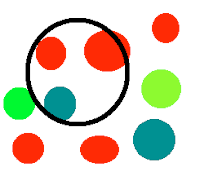 I've just circled one blue and two red. Green doesn't get to go to the new bucket.
Finally, we're down stream at our last bucket, and the founding marbles have little marble babies, and populate the bucket. This leaves us with three things we can compare.
Bucket 1
Bucket 2
 ... and Bucket 3
You can see that each successive colonization results in fewer and fewer colours being represented in the population. The same is true about Genes - obviously it's true, because otherwise why would I make such a dumb analogy. There are other factors at play, which I won't go into, but this is the nut of the Founder Effect. You might realize that this is a special case of a bottleneck, and you'd be right! It's the same principle, where a few number of individuals make up what ends up on the other side. But in this case, your source population is (normally) maintained.
So what you can do is look at the areas where you see animals, and measure their genetic diversity. This'll allow you to puzzle out where a group of animals had their founders. This had actually been done for humans, and it's considered heavy support for the Out of Africa hypothesis - Africa is the centre of human genetic diversity. It's frequently said that there's more genetic diversity in one village in Africa than there is in some whole countries!
But humans are boring. And right now, I'd write about moose, except I've used quite enough words for one post, so I'll postpone it until another.
Imagine you have a bucket marbles. And these marbles can mate, and have baby marbles of similar colour. Bear with this stupid analogy for a moment.
So you start with a bucket, and the next generation inside that bucket looks a lot like the first. Things are at a balance.
 This turns into that.
Now, let's pretend a new bucket opens up. That is to say, it gets set close to the other bucket, and a few random marbles get to jump into the new one and live out their little marble lives there.
 I've circled the ones that get to jump onto the new bucket.
Now, in our new bucket, only the ones that got there get to make their little marble babies inside the bucket. There are no dark blue or black marbles because they never made it. Just Red, Green, and Light Blue. They are fruitful, multiply, and reach the brim of the second bucket.
 The second bucket looks a lot like this.
Now a THIRD bucket is placed near the second bucket. Why do I have all these buckets? Well, I've got a lot of chores, and I need some for the sink, some for fishing, some for mixing stuff, and some for packing water. Again, only some marbles get to jump into the new bucket, mostly at random.
 I've just circled one blue and two red. Green doesn't get to go to the new bucket.
Finally, we're down stream at our last bucket, and the founding marbles have little marble babies, and populate the bucket. This leaves us with three things we can compare.
Bucket 1
Bucket 2
 ... and Bucket 3
 You can see that each successive colonization results in fewer and fewer colours being represented in the population. The same is true about Genes - obviously it's true, because otherwise why would I make such a dumb analogy. There are other factors at play, which I won't go into, but this is the nut of the Founder Effect. You might realize that this is a special case of a bottleneck, and you'd be right! It's the same principle, where a few number of individuals make up what ends up on the other side. But in this case, your source population is (normally) maintained.
So what you can do is look at the areas where you see animals, and measure their genetic diversity. This'll allow you to puzzle out where a group of animals had their founders. This had actually been done for humans, and it's considered heavy support for the Out of Africa hypothesis - Africa is the centre of human genetic diversity. It's frequently said that there's more genetic diversity in one village in Africa than there is in some whole countries!
But humans are boring. And right now, I'd write about moose, except I've used quite enough words for one post, so I'll postpone it until another.
Subscribe to:
Posts (Atom)
