Showing posts with label science. Show all posts

Wednesday, 9 March 2011

DInner, deconstruted

What do you do when you're richer than any human could possibly want in a lifetime? If you're former Microsoft CTO, Nathan Myhrvold, you start out advocating searching for dinosaur vomit. After all, birds will sometimes spew, and what are birds, if not modern dinosaurs? But a man has to have a hobby between encouraging people to dig for Dino-Pellets. Nathan's is running a food science lab of his own making, which has just released a 2000+ page, 6 volume set on their years of research. It's called Modernist Cuisine.

Quite a few people have written about the kitchen lab, such as this current Network Today article, and this older New York Times article that shows that its been on their radar for a while. But I've noticed people have focused on the equipment Nathan's lab has, more than the really interesting bit - he's employed a scientific hypothesis testing framework for organizing his romp through the gastronomic world. Here's an example from the above NY Times article:
The conclusions have often been backed up by careful scientific exploration. For example, confit, the French technique of cooking slowly in fat, is supposed to impart a unique taste and texture as the fat penetrates the meat.

But Dr. Myhrvold said: “There’s no way it could penetrate. The molecules are too big.”

He said double-blind taste tests proved that the same tasty results could be achieved by steaming and then rubbing some of the fat on the outside.
This isn't new to the world - people have used it before -  but even normal advocates for culinary science are applauding him for how far he's take the process with this work. Cooking, sadly, is filled with too much woo - such as the load of misinformation surrounding organic vegetables (Isn't it enough to eat them because they're sustainable?), or the linking of cost with quality (the best thing you can do to improve someone's wine tasting experience is to tell them it's an expensive and rare wine). Some rigour is nice to see.

Sadly, such a book is not for the likes of me - it's 625 dollars for the full set. I'll have to be content with this really cool hamburger deconstructed infographic from the WSJ that came with their own story about Modernist Cuisine.

photo from the WSJ infographic mentioned above

Wednesday, 8 December 2010

The Dragon has flown!

As much as I prefer NASA to own its own orbital fleet of rockets, this is really, really great news - the Dragon, a privately built rocket and space capsule built by SpaceX, has successfully achieved orbit and splashed down in the Pacific Ocean! This marks the first private craft that successfully achieved this feat. This is fantastic news, because it means that the day that I can take a vacation on Saturn's moons is a little bit closer. And, more practically, it means the ISS will probably have a little more life left in it.

Go to the link and check out the videos! It's neat!

Photocredit: NASA TV

Friday, 22 October 2010

Using Physics to save a life

There's this wonderful story making the rounds about how an engineer in Washington used a basic knowledge of physics to save the life of an elderly driver passed out behind the wheel. You can read all about it at the Seattle Times. Mr. Innes saw the driver of a truck was passed out and heading for a busy intersection, but the vehicle was still going. So he took his van, got ahead of the truck and matched the speed. Then, decelerating, he let the truck rear-end him, and then used that contact to slow down the truck. The trick here is that while both vehicles were travelling fast, they were both travelling in the same direction, so at the time of the crash, the difference in speed was only a few miles per hour. This resulted in a much less dramatic crash, after which he could slow presumably by breaking thus avoiding a crash with a larger difference in speed (like 80+ mph).

In a bizarre show of humanity, Mr. Innes was told that he wouldn't have to cover damages for the collision. The Insurance Company promises not to act humanely twice.

Thursday, 19 August 2010

Does caffeine help you drink?

ResearchBlogging.org
It was my brother who told me that drinking coffee while drinking alcohol was a good idea - it would lessen the effects of intoxication. I launched into an ethanol fuelled discussion of how physiologically implausible that sounded to me, but we were celebrating a great occasion, and so I don't think I got much beyond slurring something about cyclic AMP before we instead had some of Arizona's finest porter. But I recall that exchange fairly well, a few years later.

It's with the fact that I'm taking on my brother that I write this - here's a man who can, and has when I was younger, beat me up, so I'll be diplomatic about it. Energy Drink-Cocktails have been in vogue for the last little bit, so Ferreira and colleagues decided to perform a small experiment of the effects of Redbull® and vodka. They took 26 subjects, all Brazilian males, and were put on treatment of one of two doses of vodka (a lesser and greater amount), modulated with and without Red Bull. There were a total of 3 treatments at least 7 days apart, and the whole thing was double blinded throughout - meaning neither researchers nor subjects knew whether they were getting alcohol, or the alcohol mixed with the energy drink. They also standardized the subjects on calories in a novel way - they used a big mac as a pre-drinking caloric unit. Who knew McDonalds was a research tool?

The graph most worth reproducing is the one that shows absolutely no effect on breath alcohol concentrations. I've included it to the right. I'm not fond of breath measurements (blood is better), but that aside, the effect is pretty clear: there is none. Co-drinking caffeine does not appear to modulate your BAC. Already, one urban myth dead.

But even if it doesn't effect your BAC, perhaps it effects how intoxicated you are, or your performance while intoxication. They tested this, by examining motor co-ordination and visual reaction time. In both cases, there was no effect of energy-drink on performance. Having a Red Bull® does not improve your ability to function while intoxicated. The popular myth of co-administered caffeine appears well and truly dead. But this raises the question, why did such a persistent myth get started?

There's no good figure for this (basically a page of tables), but at the same time they asked their subjects a variety of questions about wellbeing, and how they felt at the time. It covered the field from tiredness, tremor, to speech impairment and so on. Now, right now, these menus are basically a laundry list, and some of the results can easily show up as positivity spuriously. With that in mind, they found that individuals felt they had significantly better motor co-ordination than they in-fact had. Remember, they were double blinded, so they didn't know what they had just drank. The expectation bias should be weak in this instance - something about the energy drink makes us /feel/ illusory confidence in our motor skills. Perhaps it prevents us from feeling how poor our skills have become, or perhaps it bolsters confidence in the skills. It's hard to divine which, from the data.

Aside from the problem of multiple tests on that, I've got one other criticism of the study, and that's how they standardized their subjects. I've long suspected that self-reported alcohol consumption is not a reliable indicator of true alcohol (or other drugs) consumption. There's a stigma attached to excessive drug consumption, and so people are likely to under-report their use. There needs to be a better way to gauge participant alcohol consumption.


Ferreira, S., de Mello, M., Pompeia, S., & de Souza-Formigoni, M. (2006). Effects of Energy Drink Ingestion on Alcohol Intoxication Alcoholism: Clinical and Experimental Research, 30 (4), 598-605 DOI: 10.1111/j.1530-0277.2006.00070.x

Monday, 2 August 2010

Some Observations on UPS et al.

Living in Alaska gets you used to shipping stuff. Whether it's bush orders, or buying speciality parts you can't get in the state, everyone has a go at it eventually. A discussion with an out of state acquaintance on her woes using UPS lead me to a stunning realization: UPS is run by cosmologists! I mean, of course, the physicists who describe the make up of the universe (and the >5% of it that is made of normal matter). This would explain quite a bit.

First, shipping companies seem to work on a different clock than the rest of us, when it comes to scanning in packages. Not GMT, PDT, or anything like that. No, hours can pass in minutes, and minutes can pass in hours. This is what you'd expect from shipping companies who occasionally accelerate close to the speed of light. The opposite effect must stem from the rest of the world, accelerating similarly while the package remains at rest.

Second, if you know where a package is (via a tracking service), you have no clue where it's going. If you know its velocity, you don't know where it is. This is keeping in line with the Uncertainty principle. Very rarely does anyone know exactly where the package is at any moment.

Other quantum effects can be noted in our third line of evidence, in that a package can be said to be delivered, and yet undelivered to the recipient, at the same time. This is keeping in line with the Copenhagen school of quantum mechanics, showing that our package's wave form has not collapsed yet. This is worrisome because until it's observed, the package is both delivered, undelivered, and a Tyrannosaurus rex all at the same time. It's not that the T. rex is dangerous that worries me, but there's a sur-charge for shipping animals and I'd rather not pay it.

If it were observed, it would collapse down to a single state of being either delivered or undelivered (or less probably, the aforementioned Triassic animal). The package is rarely observed, however, because of our second issue - no one knows where the package is. I can only assume this inability to observe it is because they have near perfect information about the package's velocity.

Finally, packages seem to have a temperature, in that the faster they move from ground to plane to wherever, the more they're banged around (no matter how many 'fragile!' stickers you put on it). Packages that are sent over-night arrive looking like the army used them for target dummies, while packages sent two-day merely look like a herd of football players trampled it.

Clearly, the evidence is irrefutable. FedEx and UPS are run by physicists.

Friday, 30 July 2010

Der Spiegel interview

While some of us are off tasting the newest batch of home-brew, I was reading this great Der Spiegel interview with Craig Venter - decoder of the Genome, creator of the first artificially produced genome. Craig Venter is a fascinating character. His arrogance allows him to tackle projects that most people would feel are unworkably hard and complex. Is it still arrogance if you and your team is really that good? Between the two central 'characters' of the human genome sequencing project, Venter and Francis Collins, I much prefer Venter because he talks no-nonsense Science, while Collins has the tendency to slip into generalities, speak in hyperbole, and mostly has been a one hit wonder. Venter comments on him, accurately in my estimation,
SPIEGEL: So you don't consider Collins to be a true scientist?

Venter: Let's just say he's a government administrator.
A good administrator, in my estimation, for managing the behemoth government run genome project, but not the gee wiz scientist who cracked the genome that everyone seems to think he is. There's this tendency to introduce him as 'the man who sequenced the human genome.' What bothers me the worst is that he rarely, in my experiences, corrects this mistake.

This is how the interview starts, and it only gets better and better:
SPIEGEL: Mr. Venter, when the elite among gene researchers undertook the decoding of the human genome, you were their greatest enemy. They called you "Frankenstein," "blood sucker," "Darth Venter" and even "asshole." Why do you attract so much hostility?

Venter: Well, nobody likes to be beaten -- by superior intelligence, planning and technology. That gets people upset.

SPIEGEL: Every area of science is competitive. But it doesn't lead to that kind of hostility in all areas.

Venter: The human genome project was completely different, it was supposed to be the biggest thing in the history of biological sciences. Billions in government funding for a single project -- we had never seen anything like that before in biology. And then a single person comes along and beats scientists who have been working on it for years. It is no wonder they didn't like that.

SPIEGEL: Wasn't it more the case that your opponents were afraid that you, as a profit-oriented entrepreneur, would make the human genome your own private property?

Venter: That is totally absurd; and you know it. Initially, Francis Collins and the other people on the Human Genome Project claimed that my methods would never work. When they started to realize that they were wrong, they began personal attacks against me and made up these things about the ownership of the genome. It was all absurd.
I strongly encourage you to read the full thing. Der Spiegel did a bang-up good job on this interview!

Wednesday, 28 July 2010

Saying what we suspected

If you're in the north, this time of year you don't get a very good look at the stars for another month or so. Actually, today is the last day of the year without dawn or dusk, where the sun goes a specific number of degrees below the horizon. Thus ends our 24 hours of daylight. But if you can see the stars now, or if you could see the stars in a few months, you might look up and wonder if anyone is looking back. It's a question as old as it gets: are we alone? Does earth have the only life in our galaxy, or universe, or are there others like us out there, with alien hopes and dreams, alien struggles, on alien planets?

For the longest time, it was assumed that we could never know the answer to this question. After we started measuring the distances to the stars, we realized how mind-bogglingly vast the galaxy was, and it sort of crushed the hope for exploration of those stars. This was before we knew about other galaxies, which are even mind-bogglingly further. Hopes for interstellar exploration are dim, barring the discovery of exotic things like "Negative matter" or energy on the scale of Plank Energy. But Frank Drake realized that using probabilistic statements, he could estimate the number of alien civilizations in existence. It's very non-controversial, and just a bit conservative:

N = R* x fp * ne * fl * fi * fc * L
or the Number of civilizations in our galaxy is equal to the rate of star formation in our galaxy, the fraction of those stars that have planets, the number of planets that can potentially support life per star, the fraction that go on to _develop_ life, the fraction that go on to develop intelligent life, the fraction of intelligent life that develop technology, and all this times the length of time that civilizations will release detectable signals.

It's difficult to estimate fl, fi and fc, but thanks to exciting work on the moon Titan, as well as Mars, the percent of planets that develop life, or are capable of developing life might not be as low as we thought - that is fl. R* is considerably easier to measure, and is estimated to be around 7 stars per year, averaged over the life of our galaxy. This leaves fp and ne - fraction with planets, and number of earth like planets - as the last of the parameters we have an honest chance at getting a great estimation of.

That's where Kepler comes in. The Kepler satellite is a stellar observatory launched by NASA 2009, with the goal of finding earth-like planets. The problem with detecting planets in space is two-fold. A) they're tiny, and b) they don't really glow. Imagine you're on a boat, on a clear night, trying to look at another boat with a pair of binoculars. You can see the other boat - it has lights on - but you can't see the people because they don't glow, and they're too far away. Occasionally, one might pass under some light, and you could get a glimpse of them for a short moment they're fully illuminated but you have to be very lucky to see this, and it doesn't work from a greater distance away. Or they might pass in front of the light, and though you can't see them, you know they're there because they blocked the light. It's easier to see them from a greater distance, since you're inferring from the dip in light reaching you, not by directly imaging them.

The Kepler mission similarly uses this 'transit' method for looking at stars, looking for tiny dips on light as the planets pass in front of them, temporarily blocking some of the light. Previously, our methods were constrained to looking for planets so massive that their gravity causes their mother star to wobble. Unsurprisingly, most of the planets we've found are massive and close to their mother star - definitely not candidates for life supporting planets. The Kepler mission can spot much smaller planets using the transit method, and will let us (among other things) narrow down the window on how many earth like planets there are.

A screen capture from Dimitar Sasselov's presentation at the TEDGlobal conference.
Dimitar Sasselov, of the Kepler mission, let a massive bombshell at the TEDGlobal conference in the UK, ahead of schedule, and presumably without permission from NASA. Buried in his slides, and casually mentioned, is the number of earth like planets they've found so-far. The number is staggeringly huge. Suddenly, the super-massive planets we've been finding thus-far are back to being weirdos, and non-normal, as the majority of planets they discovered were earthlike. You can watch the presentation at the bottom of my post; I strongly recommend you do. It's worth throwing a huge amount of caution in here, saying that this is not peer-reviewed science, and was not authorized. It's quite possible that Dimitar was horribly wrong, and his facts and figures are incredibly erronious.

I'm not an astronomer, so I can't generalize this to a rate and a number for the purposes of the Drake Equation, but it's pretty dang clear to me that the new values will be high. This, holding the rest of the estimated values of the Drake Equation steady, raises the number of other civilizations out there. As a biologist, I can't help but feel life is almost inevitable (although intelligent life rare). I have more than gut reasons for holding this view, and maybe I'll elaborate on them later. I strongly suspect within my life-time, we'll find proof of life on Titan (before Mars - I'll even gamble money on it), which will widen the niche that life is show to be able to cling to. In reality, I strongly suspect we will find that life, though not cheap, is abundant and resplendent.

You can read more at discovery news, and spaceref.com. And pretty soon, I suspect, everywhere else.

Monday, 14 June 2010

A very dangerous precedent

Usually, any argument in academia is limited to just a few letters back and forth, buried away in some journal. Sometimes, it's elevated to the level of "Cold Stares," and then in a few rare cases, a shouting match outside a Hotel at a conference after too many drinks. They can get quite personal; I once heard a respected emeritus tell a scientist that he shouldn't be allowed near students, he was so wrong. But so far, the US's habit of suing over everything remained out of science.

Until now.

According to the New York Times, A paper published this week in the American Psychological Association's journal titled "Is Criminal behavior a central component of psychopathy?", and it is a scathing review of the standard system which individuals use to evaluate whether individuals are psychopaths, and likely to commit crimes again. The authors, Skeem and Cooke, argue that the evidence suggests that psycopathy and criminal behaviour are simply correlated, and there isn't a causal relationship between them. This is the very essence of a scientific argument, where one side attacks the other over construct validity (that is whether their scientific concept is valid), they make predictions, all in a dry and technical format. The paper was prepared for publication in 2007, and accepted. But then the person they were criticizing caught wind of a draft.

"The main issue here is that these authors misrepresented my views by distorting things I said," he said in a telephone interview. "I have been doing this work for 40 years and never seen anything like it."
Dr. Hare immediately threatened Skeem and Cooke with a lawsuit if they went forward with publication, effectively throwing the breaks on the whole thing. The APA didn't publish until 2010, claiming that it had to "All legal claims." There were three years of reviews, legal correspondences, and revisions while the damn thing dragged on.

To me, this is positively outrageous. The idea that science should be decided through legal means is somewhere between absurd and incredibly absurd. You can't litigate reality. Either a set of authors are correct in their criticisms, or they're incorrect. I can't even think of a situation where a scientist could be criminal, merely putting forward an idea. They can be disastrously wrong, but if this is the case, the peer review process, where other scientists critique work before it is accepted for publication, will sort those papers out. If you feel someone misrepresents your work, write a paper criticizing their construct of your work. And, here's a crazy idea, show experimentally why your construct is correct, and why theirs is crap.

That said, while I'm shocked by this legal battle which delayed publication for years, I half expected to see its ilk. I didn't think I would hear about it in Psychological research, but in environmental science, where some company sues some author over research which curtails oil and gas development, or something of that nature. Conservation science has become a battleground over which any random person will have an opinion, and I half expect this race to the bottom to result in lawsuits towards scientists at some point. It's for that reason I'm disgusted by the precedent this whole mess has set. Dr. Hare has done us all one massive disservice.

Dr. Hare:

Wednesday, 26 May 2010

Scientists are getting old

Here's an interesting piece (sorry for the paywall) that argues what I've suspected - Science is getting older. And that's not a good thing.

That's the question behind a paper (abstract available here) released Monday by the National Bureau of Economic Research. The paper -- by Benjamin Jones, associate professor of management at Northwestern University -- argues that science has changed in key ways. Specifically, it argues that the age at which researchers are able to make breakthroughs has advanced, and that scientists are parts of increasingly larger teams, encouraging narrow specialization. Yet, he argues, science policy (or a lot of it) continues to assume the possibility if not desirability of breakthroughs by a lone young investigator.
Recently, I was telling a student considering making the jump into Math and Astronomy (from English) that they shouldn't worry about how old they are, as the average graduate student is now around 30 something. I forgot where I read that, but now I wish I could find it again. This mean most people start their professorial career (in academia) or move to commercial labs in their late 30s, if not 40s. The man who heads my research group at my last job typified this, having gone back to college when he was in his late 30s. Granted, a large chunk of his 20s was taken up by being in Vietnam.

Just to be contrarian (a healthy thing, in science) I'm not sure what the world needs is more collaborative research. Sure, it'll let us tackle bigger and bigger questions, but those big questions are increasingly narrow. Further, it feels like these massive collaborations are sort of the cludge solution to many of the problems. Instead of clever experimental design, we're substituting brute force.

Sometimes, I think the solution is to make people in both academia and industry to take a mandatory Patent Office period.

Tuesday, 6 April 2010

When it doesn't matter where you're from

ResearchBlogging.orgPeople move animals around. It's what we do. Why are there Elk on Afognak island? Some guy thought it was a good idea at the time. Wildlife managers in the past were some of the biggest conduits for moving animals around, frequently en mass, back before biology really caught up with the profession. We can cite plenty of examples where moving animals around to do population rescues was a bad thing - the Arabian Oryx got both inbreeding and outbreeding depression at once! And there's others, still.

Why? We predict animals to be generally well adapted to their environment, or well adapted to it pre-human mucking around. What it takes to be a good Elk in Hungary is very different from what it takes to be a good Elk in Norway. Norway is pretty different from Hungary.

Quick side note: Names are confusing, even to a professional Here, I'm talking about what North Americans call Elk, or Wapiti. What Europeans call Elk is Alces alces, or what North Americans call "Moose." They call NA-Elk "Red Deer." In any event, it's Cervus elaphus. North American elk are sometimes called Cervus canadensis, but frankly, I think that's a load of hooey. But that's an argument for another day. When I say "Elk," I mean Cervus elaphus or C. canadensis.

Just reading my explanation of the nomenclature makes me want to get a stiff drink!

"Strangely" enough, the situation I just gave to you as a hypothetical happened. So, the question is... does it matter? Does putting Hungary blood in Norway animals make them maladapted? Well, Haanes et al. studied whether these long-distance translocations hurt a population on an island called Otterøya. What a wonderfully Norwegian looking name! The population on Otterøya was down to 12-14 individuals, 3 or 4 or which were stags. Since Elk tend to have very skewed reproductive success in the males (meaning, either you're the big bull and get plenty of reproduction, or you get little-none), it means you can basically 2 or 3 individuals contribution into the next generations. That brings it down to 9-12 individuals who contributed their genes to the next generation.

To avoid expatriation, 17 German•Hungarian 'Hybrid' elk were brought in for a population rescues. I say 'hybrid', because supposedly those are different subspecies. I have issues with that, which I'll outline later. Regardless, the population exploded, shooting up to 100 Elk in 10 years, and even higher since. Obviously, the population rescue worked. But what's the long-term consequences of the German•Hungarian animals' introduction? It could be that the Elk are less successful than they would be, if they didn't introduce that linage.

Well, Haanes et al. decided to take a two-prong approach. First, they took blood/tissue from Elk on Otterøya, they sampled Elk on mainland Norway, and they sampled 20 Elk in Hungary. They took DNA from all of them. They would have loved to sample the German Elk, but since the translocation, the rest of the German Elk were bottlenecked, translocated some more, and probably experienced some introgression. Basically, they're not the same Elk anymore. Finally, they measured body characteristics for the various populations, hijacking some datasets to do so. I'm fine with that; it's hard to get good data on hunter-derrived samples because hunters bias their hunts to tasty/big animals.

I'll skip ahead to the results. First, using STRUCTURE, they found a best solution of `there are two populations. The program STRUCTURE tries to assign individuals to populations without knowing anything about where they're from. It doesn't make assumptions in that regard (although it can, if you tell it to). I've put the STRUCTURE bar-plots next to this paragraph. Each vertical bar represents an individual, and each colour represents one population assignment. So a half red, half green vertical bar represents 50% assignment to both red and green cluster. Next, they found that their mtDNA showed that there was a hybrid origin of the elk. The morphometric measurements suggest that body size is large in the Otterøya Elk. Take together, the message is "Hybridization happened! But it looks like things went well for them."

First, I'm not sure that their various elk are deserving of subspecific designation. I'm not too familiar with the lit on Eurasian Red Deer, but Europe is where a lot of taxonomy was developed, so they've gone through and divided Europe up with a fine tooth comb. Just about everything has its own subspecies over there, and I'm not sure legitimately so. The reason why this matters is that a subspecies implies a whole lot more adaptation than just two unconnected, remote populations. I do see that other people are skeptical of the taxonomic assignments. Taxonomy matters.

Second, I draw your attention to the STRUCTURE plots. I've seen this sort of plot before, where my most likely solution is lower than what my true apparent tree is. I suspect STRUCTURE focuses on lower k values, stopping at some high level divide and not going any deeper. For example, I have one data set where both the highest likelyhood solution and Evanno's ∆K method solve for K=2, when in fact I have very clear structure, and structure we expect to find, at K=5. I think STRUCTURE is biased to the deepest divisions.

Still on the STRUCTURE topic, I think the Hungarian sample was just too low. Sample size matters. Fogelqvist et al. (2010) argues that 8-10 is enough in STRUCTURE. I think that might be true in selfing organisms, but I seriously question whether that's enough in most of the organisms I'm working in. Obviously, the thing to do would be to do a simulation study, which I haven't done. 20 for Hungary, for such fine scale differences, feels too small. And I wonder if how spatially distant they're sampling their populations is biasing their very high He (which is ~.8, astronomical for a mammal.) And they have a ton of private alleles too, which I have a hard time explaining - is it just a function of northern animals being lower diversity? Or maybe a function of Fennoscandian isolation - but that would support a model where Norway has something closer to a sub-specific division. And look at the number of haplotypes in the below table. I wish they rarifacted...


Finally, how do we know body size isn't environmentally induced? In my own experience, Caribou seem to follow a few different life history strategies that we've lumped into 'ecotypes.' In general, folks have found that the sedentary type is smaller. However, these aren't genetic differences, but instead diversity that seems to lie among all Caribou. The first or second generation migrants should be more like wherever they end up growing up, and plausibly not retain their sedentary phenotype. I'm hesitant to use body mass as a marker of success for supposed hybrids, for this reason. Better would be rumpfat, ovarian markers (for reproduction), etc. It's clear from the census alone, though, that these animals are doing quite well.

Too often, us in the conservation world take too much of an adaptionalist point of view. This is amusing because what we work with to get at population demographic history is almost entirely neutral markers. But few people I know will be too enthusiastic about neutral hypotheses of genomic evolution! This serves as a good counter-example to many of our examples of translocations being bad. Did Norwegian Elk lose a little bit of adaptation to their environment? It's possible, but these results wouldn't support that. Or if they did, they're currently "adapted enough" to make a good go at being Elk in Norway. Even if those crazy Europeans call Elk the wrong name. ;)

As usual, here's the abstract:
For several centuries, game management has involved translocations of non-native individuals of many species to reinforce local native populations. However, there are few quantitative studies of potentially negative effects on population viability as expected when taxa with different local adaptations hybridise. The European red deer has been subject to particularly many translocations. Around 1900, a total of 17 red deer of Hungarian (Cervus elaphus hippelaphus) and German (C. e. germanicus) ori- gin were introduced onto the island of Otterøya in Norway where few native red deer (C. e. atlanticus) remained (n ~ 13). To assess interbreeding, the present stock on Otterøya and the indigenous Norwegian and Hungarian populations were characterised in 14 microsatellite loci and in the control region of mtDNA. An intermediate level of genetic variation in the Otterøya population and the pres- ence of population specific alleles from both the indigenous Norwegian and the Hungarian population demonstrate that the introduced red deer interbred with the native. Even distributions of one indigenous and one non-indigenous mtDNA haplotype in the Otterøya population and two point estimates of admixture indicate similar genetic con- tributions from the two parental populations into the hybrid stock. Low numbers of migrants identified with Bayesian assignment tests demonstrate low recent gene flow from Otterøya into the Norwegian mainland population. The Otterøya hybrid stock has grown vastly in numbers during recent decades, suggesting a high population viability. We observed that the body mass of red deer on Otterøya was similar or greater than in adjacent indigenous Norwegian stocks, indicating that population performance has not been reduced in the hybrid stock and that gene flow probably has not had any negative effects.
Haanes, H., Røed, K., Mysterud, A., Langvatn, R., & Rosef, O. (2010). Consequences for genetic diversity and population performance of introducing continental red deer into the northern distribution range Conservation Genetics DOI: 10.1007/s10592-010-0048-1

Tuesday, 23 March 2010

Does DST save energy?

Does Daylight's Savings time save energy?

Unambiguously, no.

And that's in the states. Here in AK, there's almost no energy savings even possible unless you live deep in the Southeast. Southeast AK has some of the best access to power.

Down with DST!

Happy Birthday, Cold Fusion!

It's now been 23 years since Cold Fusion was born, and each year the pseudo-scientific advocates of that discredited piece of anaq troll around and claim that they've made it work. Like clockwork, this time of year, they amble about the media saying that limitless energy is within our grasp, if only we pour more money down the hole. Meanwhile, real fusion makes actual progress.
It was today, 23 March, in 1987 that Stanley Pons of the University of Utah announced the "invention" of Cold Fusion. They didn't do so through scientific channels, but instead by having a press conference before anyone could verify their results. Two years, and 4.5 million dollars later, the government finally listened to the scientific community, who were very sure the results were full of bull. A 4.5 million dollar lesson in why science by press-release is a bad idea™.

I took a picture of the building cold fusion was `invented` in while I was in Utah. I tried to visit the lab itself, but they'd long since torn it out and renovated it. Most of the chemistry faculty were reluctant to talk about that sad bit of history. Behind the building, in this picture, you can see the Salt Lake City Olympic stadium - a project that went considerably better, I might say!

Thursday, 18 March 2010

On the Origins of Polar bears

ResearchBlogging.org
From PNAS  March 16, 2010   vol. 107  no. 11  5053-5057 "Complete mitochondrial genome of a Pleistocene jawbone unveils the origin of polar bear" Lindqvist et al. 2010.
The polar bear has become the flagship species in the climate-change discussion. However, little is known about how past climate impacted its evolution and persistence, given an extremely poor fossil record. Although it is undisputed from analyses of mitochondrial (mt) DNA that polar bears constitute a lineage within the genetic diversity of brown bears, timing estimates of their divergence have differed considerably. Using next-generation sequencing technology, we have generated a complete, high-quality mt genome from a stratigraphically validated 130,000- to 110,000-year-old polar bear jawbone. In addition, six mt genomes were generated of extant polar bears from Alaska and brown bears from the Admiralty and Baranof islands of the Alexander Archipelago of southeastern Alaska and Kodiak Island. We show that the phylogenetic position of the ancient polar bear lies almost directly at the branching point between polar bears and brown bears, elucidating a unique morphologically and molecularly documented fossil link between living mammal species. Molecular dating and stable isotope analyses also show that by very early in their evolutionary history, polar bears were already inhabitants of the Artic sea ice and had adapted very rapidly to their current and unique ecology at the top of the Arctic marine food chain. As such, polar bears provide an excellent example of evolutionary opportunism within a widespread mammalian lineage.
I've attached a copy of their phylogeny to this post, over to the right there. You can see the clearly 'nodal' (Basal) position of the polar bear they found. My first instinct was that this blew my pet hypothesis out of the water - that polar bears first underwent cultural evolution to adapt to ice based lifestyles, and then subsequently underwent phenotypic evolution. This would explain the the fact that ABC brown bears are paraphyletic to the rest of the brown bears (but only with mtDNA markers!). However, there's something that's... mmm... niggling? I think that's a word.

See, there are two issues. First is that identification is based on morphology. It looks like a polar bear skull, therefore progenitor polar bears looked like modern polar bears. On the other hand, you would see nothing if progenitor polar bears looked like modern brown bears, because we'd mis-classify them as arctos instead of maritimus. Therefore, the study could only find that polar bears were more like modern polar bears in morphology. Connected to this issue is that given the only the left mandible (jawbone) could be recovered. Granted, that's more than what we'd have otherwise, as polar bear remains are rare (As things that hangs out around water tend to be!). Still, it may be premature to state that this is substantial morphological evolution.

My second issue is that bone are far less static than we commonly think of them. Bone is an incredibly dynamic tissue, like muscle, that grows and whithers based on whether it's used, and how it's loaded with stress from the muscles. Look at the bones of people using percussive machines such as jackhammers, for example! In biologist talk, this is what we call "Environmental induction", where your environment causes you to have some feature, not genetics or heredity. To begin with, the differences between maritimus and arctos is subtle, as I've illustrated to the right with skulls from our teaching collecting here at UAFCompare the right skull to the picture of the skull I have below. Ignoring the intra-individual differences (and the differences from differential weathering), the skeletal differences between the two species is incredibly subtle. There's few characters you can use to differentiate them, but it takes a trained eye. No one, to my knowledge, has checked to see if varying brown bear diet varies cranial morphology. Ditto for polar bears.

There are messages I'm taking home, though. First, the date of the split of the species. I'll buy it based on the stratigraphy, the tree they generated, and how well it jives with the rest of the evidence. This makes polar bears a really recent species (not that we had any suspicions to the contrary!), which is interesting. Second, whole mtDNA genome sequencing for ancient remains: even cooler than I thought it was. Third, polar bears had a polar bear diet when they split. Pretty dang cool right there. As for the course of evolution of the polar bear, I remain somewhat sceptical and hesitant to accept their conclusions. 

Edit to add: Oh, wow, am I embarrassed! I posed the wrong skull comparison! The one I have above is arctos and americanus! That's entirely wrong! Here's a proper polar bear skull!

Lindqvist, C., Schuster, S., Sun, Y., Talbot, S., Qi, J., Ratan, A., Tomsho, L., Kasson, L., Zeyl, E., Aars, J., Miller, W., Ingolfsson, O., Bachmann, L., & Wiig, O. (2010). Complete mitochondrial genome of a Pleistocene jawbone unveils the origin of polar bear Proceedings of the National Academy of Sciences, 107 (11), 5053-5057 DOI: 10.1073/pnas.0914266107

Thursday, 4 March 2010

States on Shakey Ground

While eating my lunch (Fruit salad. Healthy, but bleeeeeeh!), I came across this like. Which state in the union is the most quake prone? Well, it's no surprise to you all... but I'm actually pretty surprised that Oklahoma is the 19th most quake-prone state!

Monday, 1 March 2010

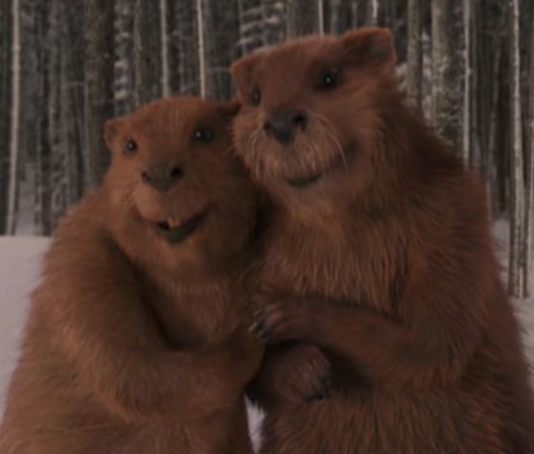
Repost: Beavers and monogamy.

Things are busybusybusy. I'm going to phone it in today. How about a blast from the past: Beaver monogamy!


About two years ago, I decided I would destroy monogamy. That's right, I'm one of those people who are out to wreck family values that the `Focus on the Family` bunch warn us all about. Except I deal mostly with animals, so I suppose I'm who `Focus on the Family Castor Chapter` warned us all about.

See, I, in 2005-06, I first began wondering about beavers - no, not that sort. Perverts. Though, I suppose I could write off a lot of things as business expenditures if I was researching them. (I'm done with the bawdy jokes now, honestly). See, the issue with beavers is that they're stereotyped as good old, monogamous, happy family critter. And it's been my experience that when we think that's so, it simply ain't so bob.

For example, for the longest, we assumed a number of species were monogamous. Take Swift Foxes. Swift Foxes are socially monogamous, and mate for life. However, a study showed 52% of offspring were not sired by the apparent mate of the mother (Kitchen et. al 2006). Among Tree Swallows, 50% of broods studied were extra pair young (Lifjeld et. al 1992). Far from being unique, many other species of birds are apparently monogamous, but only insofar as we tend to not catch them cheating on each-other.

Mr. Beaver Began to suspect his wife was less than faithful when
he read papers in the journal
Animal Behaviour describing
the rarity of monogamy in actual breeding systems.
Also, that she was cooking someone else's log for dinner was a bit of a hint.

In 2007, a book came out called Rodent Societies – An Ecological and Evolutionary Perspective, by Jerry O. Wolff(ed) and Paul W. Sherman(ed). It has a chapter written by Peter Busher on Social Organization in the Beaver. In it, he discusses facets of the beaver's social ecology, synthesizing a large amount of work for what would a grand paper. Would be, except for a single line, where he makes a parenthetical statement:
"[...] (although in most cases, this [genetic monogamy] has yet to be confirmed by DNA analysis) [...]" (p.281).
Put another way, it says that the remainder of his chapter is based off of a massive, un-validated assumption.

I was flabbergasted that people had poured so much work into a subject, when it was built on such a shaky premise. Sure enough, when I dug through the literature, I found no one had actually done the genetics (and published them) to show that beavers don't cheat on each other behind their flat little tails (I'm not fond of beaver tail, but I recently found it shouldn't be acridic tasting). This astounded me, and I resolve to study it right away.

Hah. Yeah Right.

Well, I never got resources together to look into the issue, but a group from EIU were wrapping up asking the same questions right around the time I decided `honestly! Really! Any day now!` Crawford et. al (2008) decided to sample colonies from south central and south east Illinois between from 2005-2007 using Conibear traps. The sexed them, weighed them, and then aged them. The took just a tiny bit of skin from each one. For a segment of the beavers, they sampled using live-trapping snares. In the end, they got samples from about 127 beavers, which is far more than I'd have been able to wing (I was looking at ~1/2 that, which would make for a less convincing paper.)

After this, they went home and extracted DNA from the skin samples, and then did parent-typing. This is done by looking at small junk regions we call `microsatellites` that are littered liberally throughout the genome. These microsats are of variable size, and so you can use a technique called PCR to make lots of copies of them, and then analyse them in a jell-o like substance and see which copies of the microsats the individual has. As you get one from mom and one from dad, you can then compare what mom and punative-dad had to see if they match. By doing lots of these microsats (Crawford et al did 7 different ones), you can assign a probability that a random individual could be the pup's mother or father. And if the pup has a form of the microsat that the punative father doesn't have at all, it's indicative of that male not being the actual father.

Actual parent typing is a tad more complex than that, but that's actually a good portion of the broad strokes. It's really, actually, quite simple in totality.

And then comes the figure the everyone's looking for. 56% of litters had more than one father. Zadgooks! This is not what they showed us in the Chronicles of Narnia at all! If that movie was to be biologically accurate, Mrs. Beaver would be spending a whole lot of time down at the gym, or showing the plumber where exactly that pipe's broken in the basement for the 3rd time that week.

And that's how it goes for Monogamy, by-and-large. There really aren't that many species that are strictly so, no matter what romantic notions we saddle them with. And why should they? Humans are scarcely monogamous - Jerry Springer's continued existence is testament to this fact, if nothing else! In most situations, it's in a critter's biological interest to mate with as many other males/females as they can get away with. It's sometimes not in their social interest, however, as Mr. Beaver might try to scratch Joe Beaver's eyes out for playing around with his wife. Humans, in the same vein, have firearms.

Joe Beaver suffers a mysterious log-related accident

after visiting Mrs. Beaver one fine afternoon. Mr. Beaver denied
wrongdoing, but in great detail, and before he'd been accused.

Crawford, J.C., Liu, Z., Nelson, T.A., Nielsen., C.K. and Bloomquist, C.K. (2008). Microsatellite analysis of mating and kinship in beavers (Castor canadensis). Journal of Mammalogy, 89(3), pp. 575-581.
Kitchen, A.M., Gese, E.M., Waits, L.P., Karki, S.M., and Schauster, E.R. (2006). Multiple breeding strategies in the swift fox, Vulpes velox. Animal Behaviour, 71(5), pp. 1029-1038.
Lifjeld, J.T., Dunn, P.O., Robertson, R.J., and Boag, P.T. (1992). Extra-pair paternity in monogamous tree swallows. Animal Behaviour, 45(2), pp. 213-229.

Wednesday, 17 February 2010

How to abuse Coffee

This is very, very cool.
A neuroscientist has written a guide for getting the most out of your Caffeine buzz. For people like me, who subsist on a pot a day, this is pure gold. His big points?

  1. Moderate your intake to small, frequent doses.
  2. Aim for tasks that caffeine improves performance, avoid tasks that it decreases performance.
  3. Consume Caffeine with the correct adjuvents.
  4. Know when to go without.
  5. Use the right sources of caffeine.
Go ahead and click on the link to get his full advise on each point. I think I'll make this mandatory reading for all my incoming grad students. It's far more useful than handouts on PCR sterile technique. ;)

Wednesday, 3 February 2010

Some safety dos and don'ts. I'm not sure what this Better of TED show is, but it looks interesting... Alas! No cable!

Thursday, 14 January 2010

I forgot! Annoyance Degrees C

I forgot to say what annoyed me about `Half of 40°C`! How absurd that phrase is becomes apparent when you ask "What is half of 40°C?" You might guess 20°C. Okay, what's half of -40°C? -20°C? 

The problem is 0°C and F are both not absolute zeros. You can't just take the magnitude from them and apply a fraction, and have it even remotely meaningful. .5 * 40 is not half the temperature or energy of 40 (in either C or F). You have to convert to a Scientific unit called "Kelvin," a system where the number does represent the magnitude in that way. 0K is 0K - no energy, whatsoever. So, half the temperature of 40°C is actually -116.575°C. Those are some seriously cold Hummingbirds!

I'm sure someone will correct my correction. But I know that 20° is not half 40°! :p

Tuesday, 12 January 2010

Annoyance °C

I was watching a little show on Sunday, about Hummingbirds (And in HD! It was very pretty). But the host said something that hit on a pet peeve of mine. So, let me ask you all, what is half of 40°C?

A lesser annoyance is how they treat the bird breeding systems. They presented a single view, where males are serial breeders, and females provide sole provisioning. This is a huge disservice to the massive diversity of systems, which span from social monogamy to promiscuity. It would also be a great time to discuss polyandry - that's a situation that is incredibly rare in mammals, where it's the males who are the most choosy. It typically arises because the male investment (in egg care) are greater than producing the eggs. So males choose who they want to breed with, and females go about recruiting multiple males to care for their young in various nests.

At least they didn't wax fanatical about how wonderfully monogamous they are.

Tuesday, 15 December 2009

Yellowstone Cauldera Bigger than previously thought

And they laugh at us for living in a place where -20°C weather is toasty warm. At least we're not living on top of a giant, 250 mile deep bomb.

Well, except those of us in the Aleutians. 

For those of you who didn't know, Yellowstone sits on top of a massive Caldera that's still active, geologically. It last erupted a few hundred thousand years ago, when it sent a few hundred square miles of material into the air, raining it down as far as the other side of the world. It's a big-un', as the cool kids say. Whether it goes soon (In the next 100,000 years)  or not depends on whether now having the Rocky Mountains on top of it is enough to bottle it in, but when it goes it'll take out a chunk of Idaho, Utah, and Montana with it.

If Utah, Idaho and Montana still exist, when it explodes. 

Click for Fairbanks, Alaska Forecast